
Summarising the project which, within the LINK consortium, has helped to support families with children, older people, people with disabilities, single parents and guardians, as well as households that have lost or significantly reduced their income due to the war.
The multi-sectoral humanitarian assistance programme launched at the end of April and ran for six months. During this time, 17,668 Ukrainians received hygiene, family, and food kits from Rokada, while another 5,271 people received multi-purpose cash assistance.
The foundation’s teams operated in the Chernihiv, Sumy, Kherson, Zhytomyr, and Kirovohrad regions.
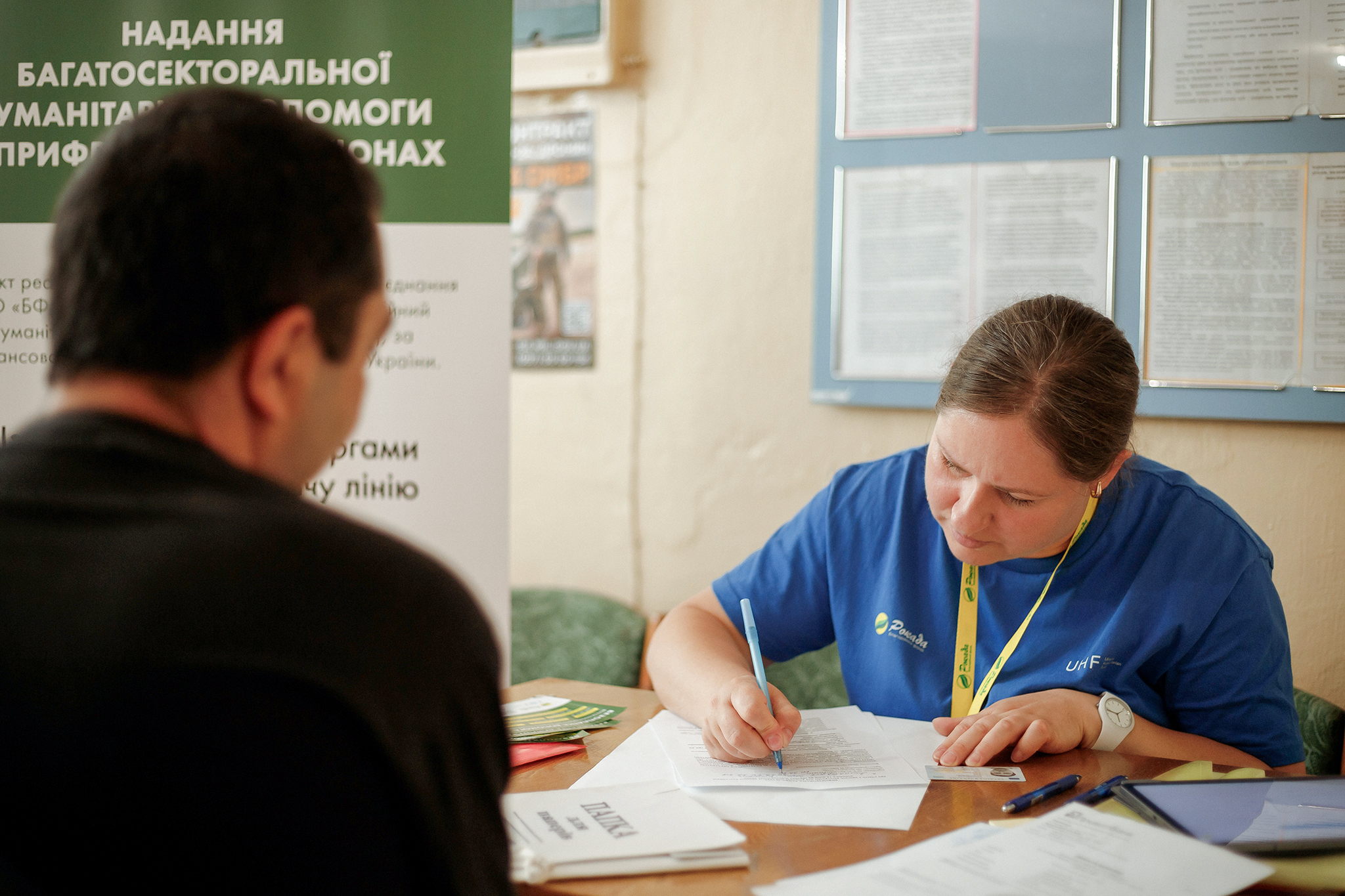
Chernihiv Region
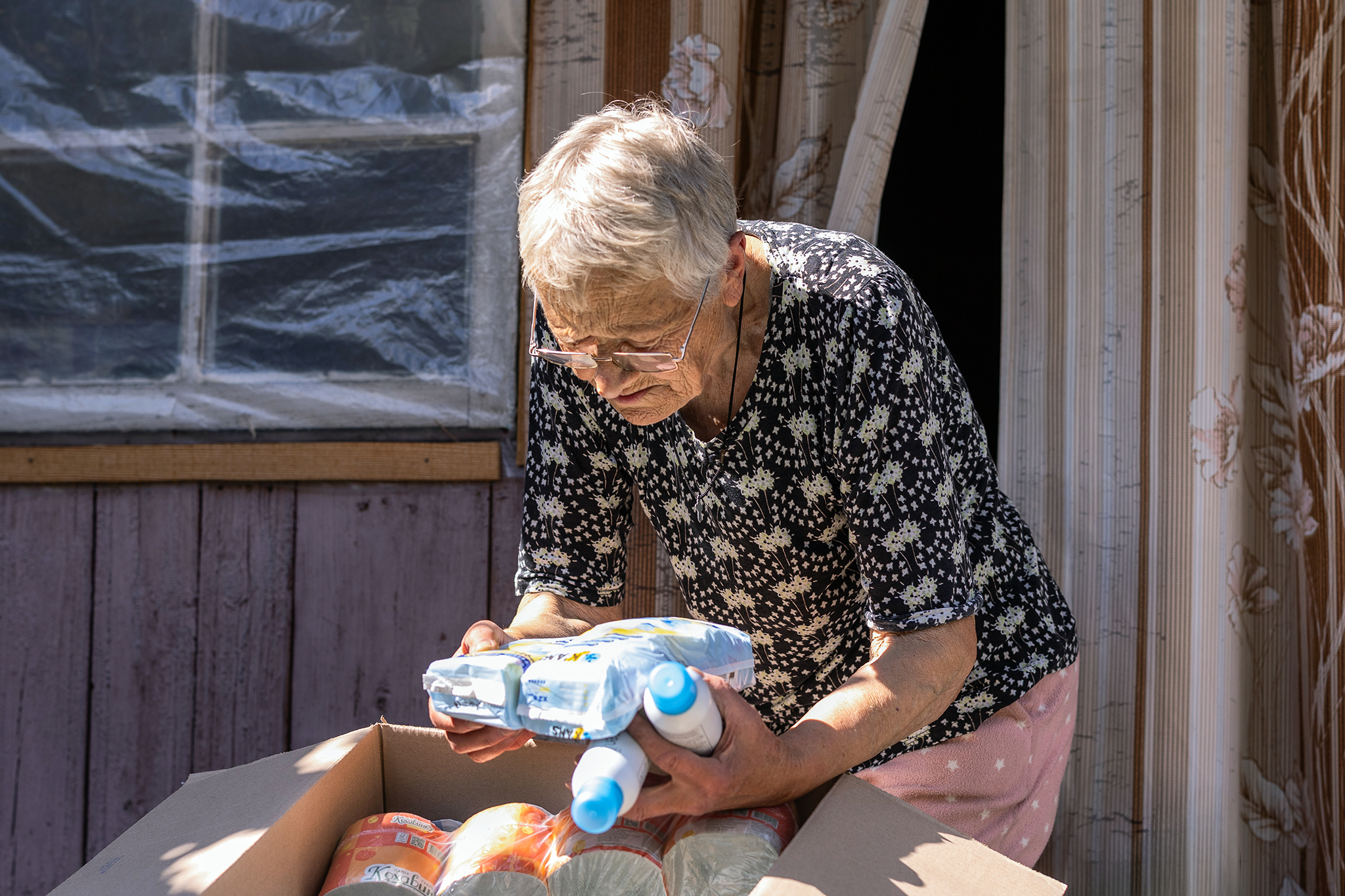
Liudmyla Petrivna is 80. In July 2022, she left Bakhmut and settled in Novi Yarylovychi.
“My house was blown to pieces, and a shell hit the outbuilding where I stayed during the winter. I lived in a cellar for several months, but in the end, I couldn’t take it anymore and decided to escape. I heard there was a centre in Dnipro that took in people like me. I walked on foot almost all the way to Kostiantynivка, and from there I was evacuated,” Liudmyla Nikolaieva recalls, adding that this was the first time she had received non-food aid. “I can’t even imagine how Rokada understands our needs so well. Personally, the washing powders, cleaning products, and everything else will last me a long time. And it is terribly expensive! For me, this is a huge saving.”
In total:
196 people with mobility impairments received 784 specialised hygiene kits;
4,788 people received 4,455 basic hygiene kits;
643 people received 2,820 food kits;
730 people received 389 non-food item (NFI) kits;
1,425 people received financial assistance.
Sumy Region
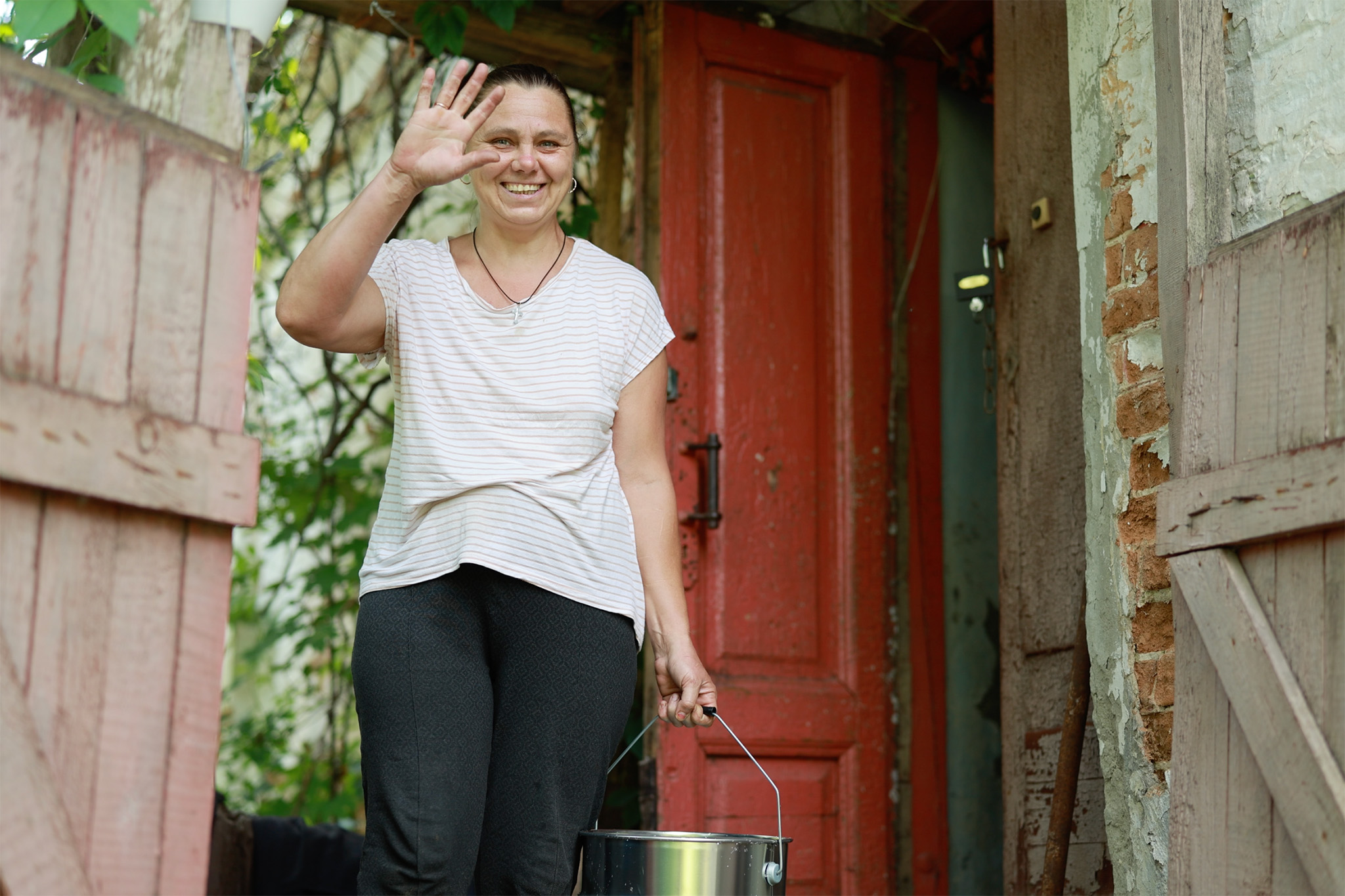
Maryna Pavlenko evacuated from Myropillia to Nyzy due to shelling. Both villages are in the Sumy region, and the distance between them is just 40 kilometres. Yet even these kilometres became lifesaving for the woman – having had everything at home, she now has to live in a semi-dilapidated, abandoned house, just to experience fewer missiles, drones, and explosions.
Above all, Maryna dreams of returning, yet she understands that nothing is left intact in her native Myropillia. Nonetheless, she believes that there will be peace and life, just as before.
Together with other residents of the region, the woman received assistance. She says this will save money, allowing her to purchase firewood for the winter.
In total:
350 people with mobility impairments received 1,080 specialised hygiene kits;
5,266 people received 5,130 basic hygiene kits;
955 people received 3,645 food kits;
819 people received 501 non-food item (NFI) kits;
1,425 people received financial assistance.
Zhytomyr Region
“People who were forced to move from the occupied territories or from the areas of military hostilities expect maximum support,” says Olesya Lytvynenko, a mother of two from Kramatorsk. Currently, the woman lives with her family in the regional centre. She registered for cash assistance to be able to purchase the necessary items for her children for the autumn-winter season.
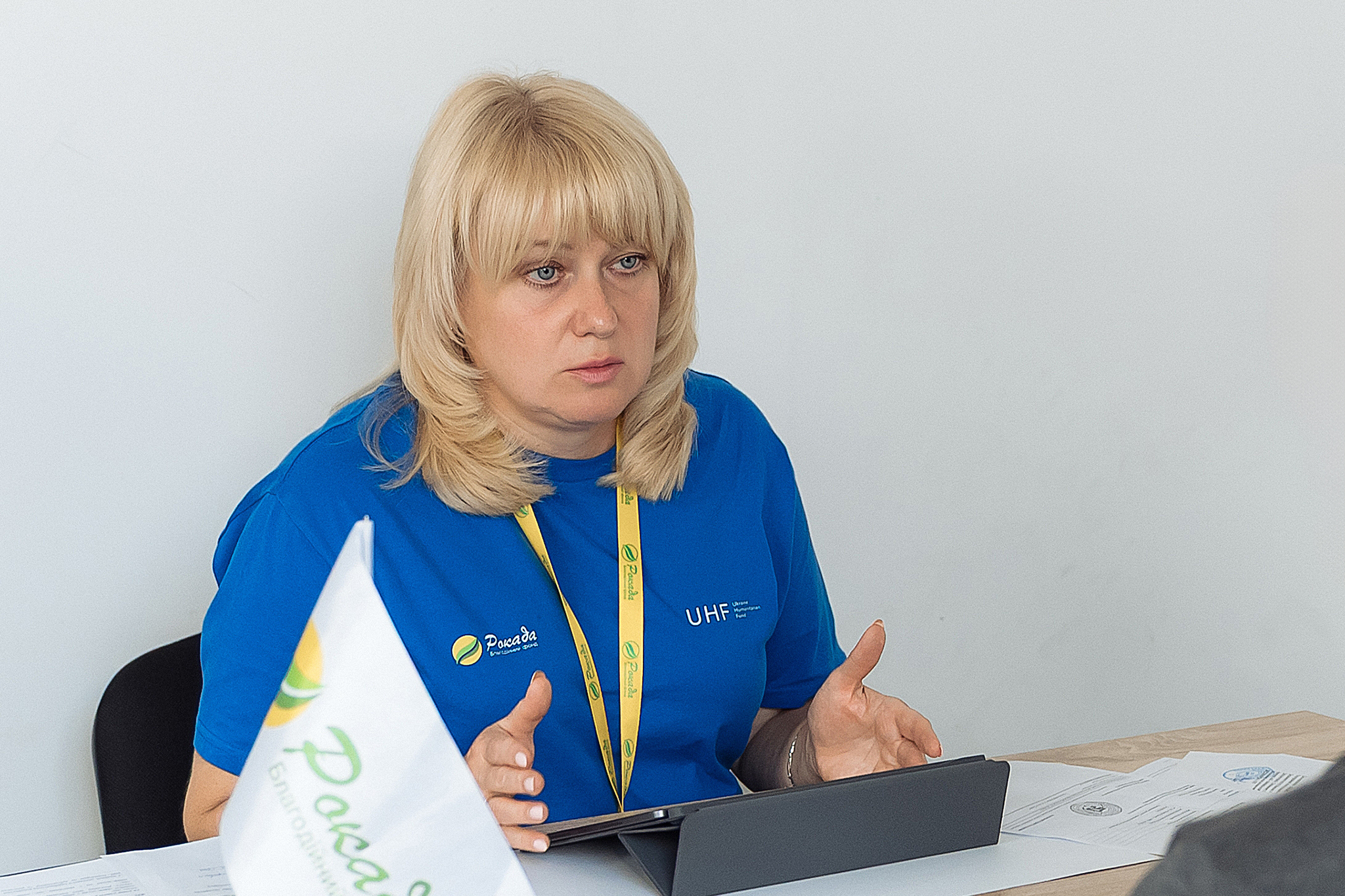
“People arrive who have absolutely nothing. An entire life in a single bag… It is an honour for me to work in a charitable organisation that provides assistance in such difficult moments,” admits Halyna Telechuk, a cash assistance registrar, and explains that the support programme in the region covered four districts: Zhytomyr, Korosten, Zviahel, and Berdychiv.
In total:
723 people received financial assistance.
Kirovohrad Region
Nataliia Demchuk – from the Kherson region settled in Smoline. Before the full-scale invasion, she had a small business – her own shop, where she traded everything that could be useful in the village: from food to household items. Today she cares for her elderly mother.
“My mother has a complex hip fracture. She has severe mobility issues and requires constant care. We are currently renting an apartment, but we previously applied for a housing certificate for our destroyed home. So, we are waiting to buy a place of our own here,” she says, adding that she dreams of planting an orchard with fruit trees, just like back in her native village.
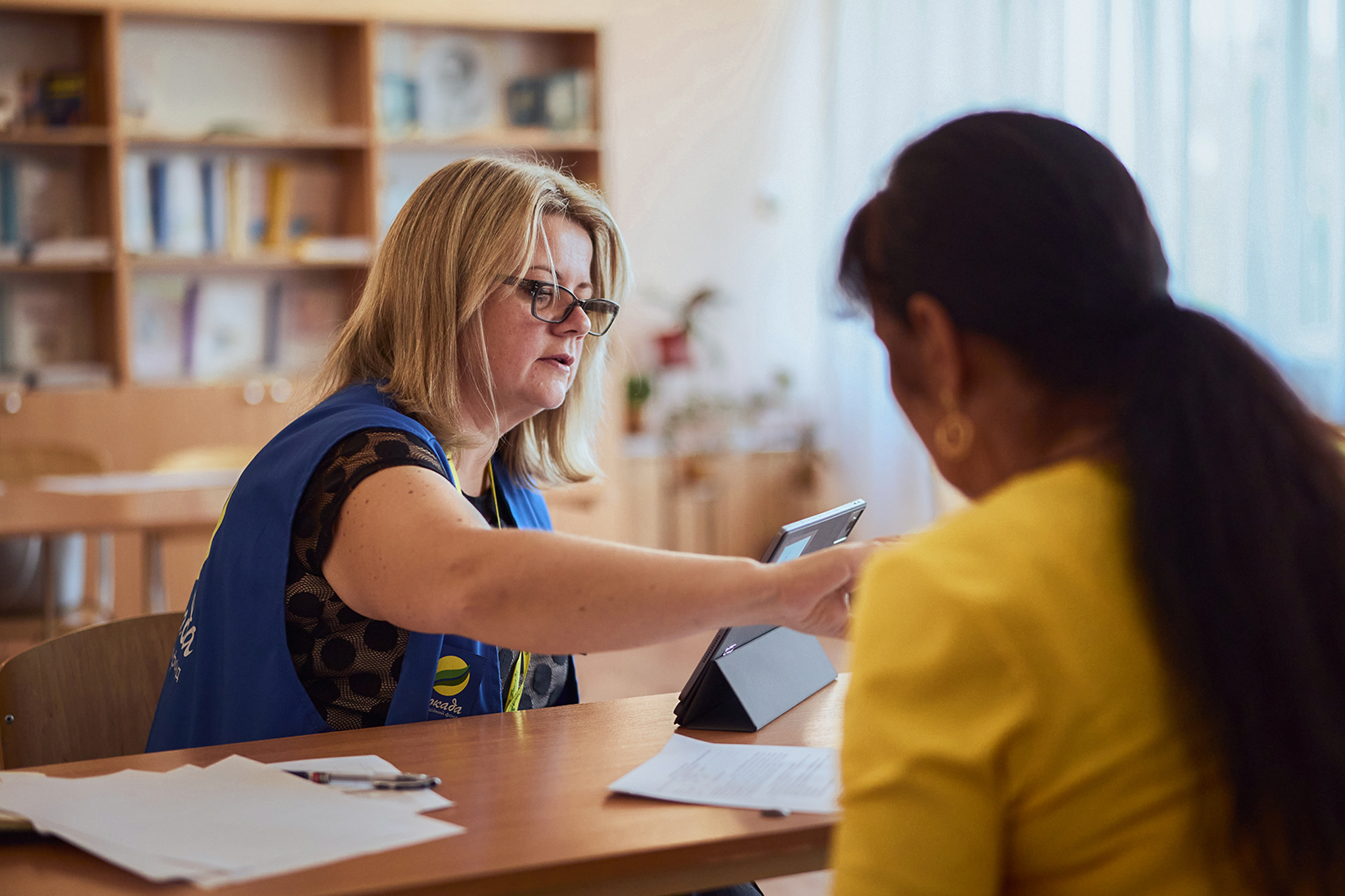
In total:
687 people received financial assistance.
Kherson Region
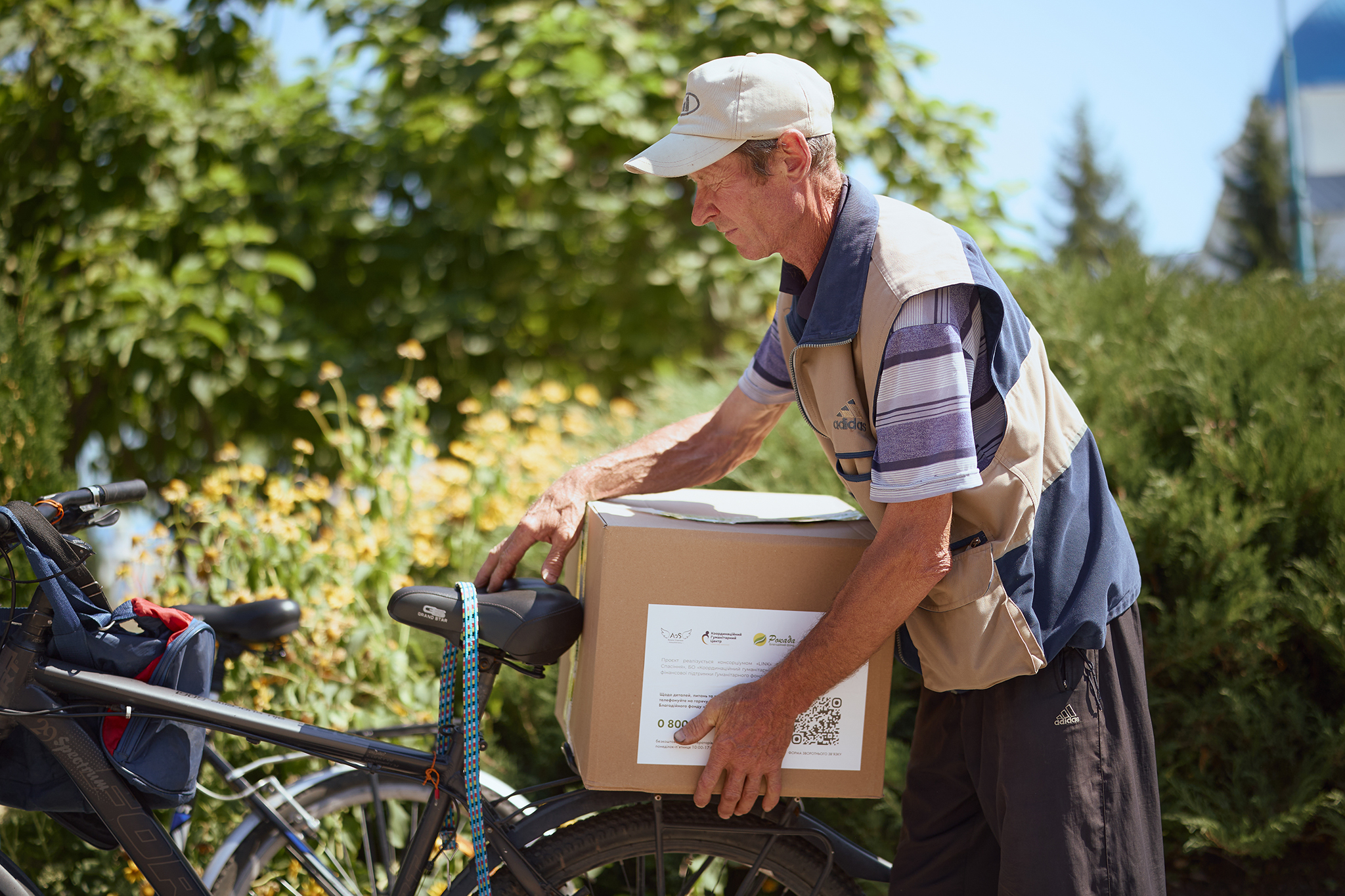
Every day, the region suffers from Russian shelling. The Rokada team has to work under extremely difficult security conditions. Yet, even in these circumstances, people receive assistance. The support program has covered two districts—Kherson and Beryslav.
“The Kherson region is the most challenging area where the project was implemented. We had to plan our distributions with a strict focus on the security situation. For many families, our assistance is not just about kits or funds, but also the feeling that they have not been forgotten,” notes Anna Hayduk, the project manager.
In total:
149 individuals with limited mobility received 596 specialized hygiene kits;
2,677 individuals received 2,280 basic hygiene kits;
514 individuals received 1,615 food kits;
581 individuals received 245 non-food item (NFI) kits;
1,011 individuals received financial assistance.
The project was implemented by the LINK consortium (bringing together the Angels of Salvation Charitable Foundation, the Relief Coordination Centre, and the Rokada Charitable Foundation) with the financial support of the Ukraine Humanitarian Fund