Listen, support, help: results of the Survivor Relief Centres’ work in October
Helping people in wartime is the daily work of our teams in Sumy, Kharkiv and Poltava. Despite Russian attacks, the Survivor Relief Centres continue to provide psychological, social and legal services. We support people in overcoming the consequences of war and gender-based violence, taking into account each person’s circumstances and needs.
The Centres operate within the cooperation between the Rokada Charitable Foundation and UNFPA, the United Nations Population Fund. The mission of this project is to respond to the challenges of war in a timely and effective manner, in particular by supporting survivors of conflict-related sexual violence (CRSV). The service is also a reliable source of support for internally displaced people, veterans and their families, people released from captivity, and families going through the painful experience of searching for missing loved ones.
In October, almost a thousand people received support from the specialists of the Survivor Relief Centres in Sumy, Poltava and Kharkiv. Among them were people coping with loss or anxiety caused by shelling, veterans adapting to life after injuries, and people released from captivity seeking recognition of the harm done to them. The teams provided psychological, social and legal support and continued case management for those who needed further help.
Sumy
Over the month, the Centre provided 229 services in various areas. In addition to psychological support, an important focus remains the psychological support of veterans adapting to civilian life, especially after injuries. Specialists pay attention to changes in their everyday functioning, emotional state and need for further support.
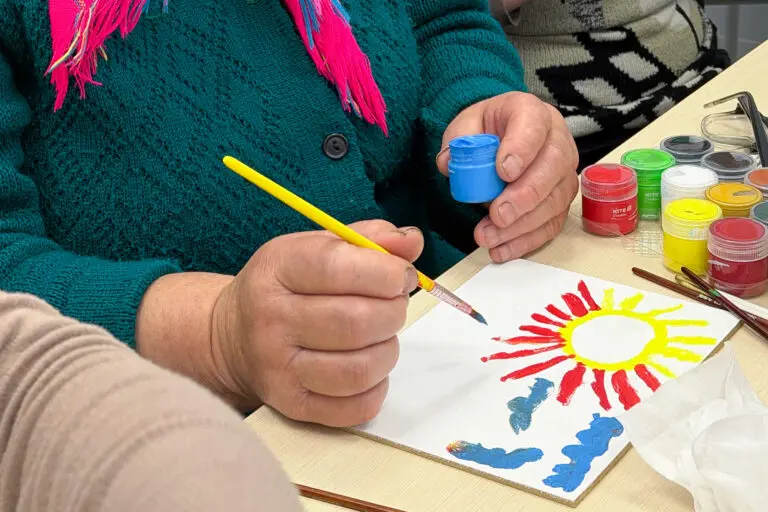
The team also worked separately with children and teenagers. Through creative tasks, the youngest learned to talk about emotions. With teenagers, the team discussed responsibility for one’s own actions, mutual respect and how to support peers who are being bullied.
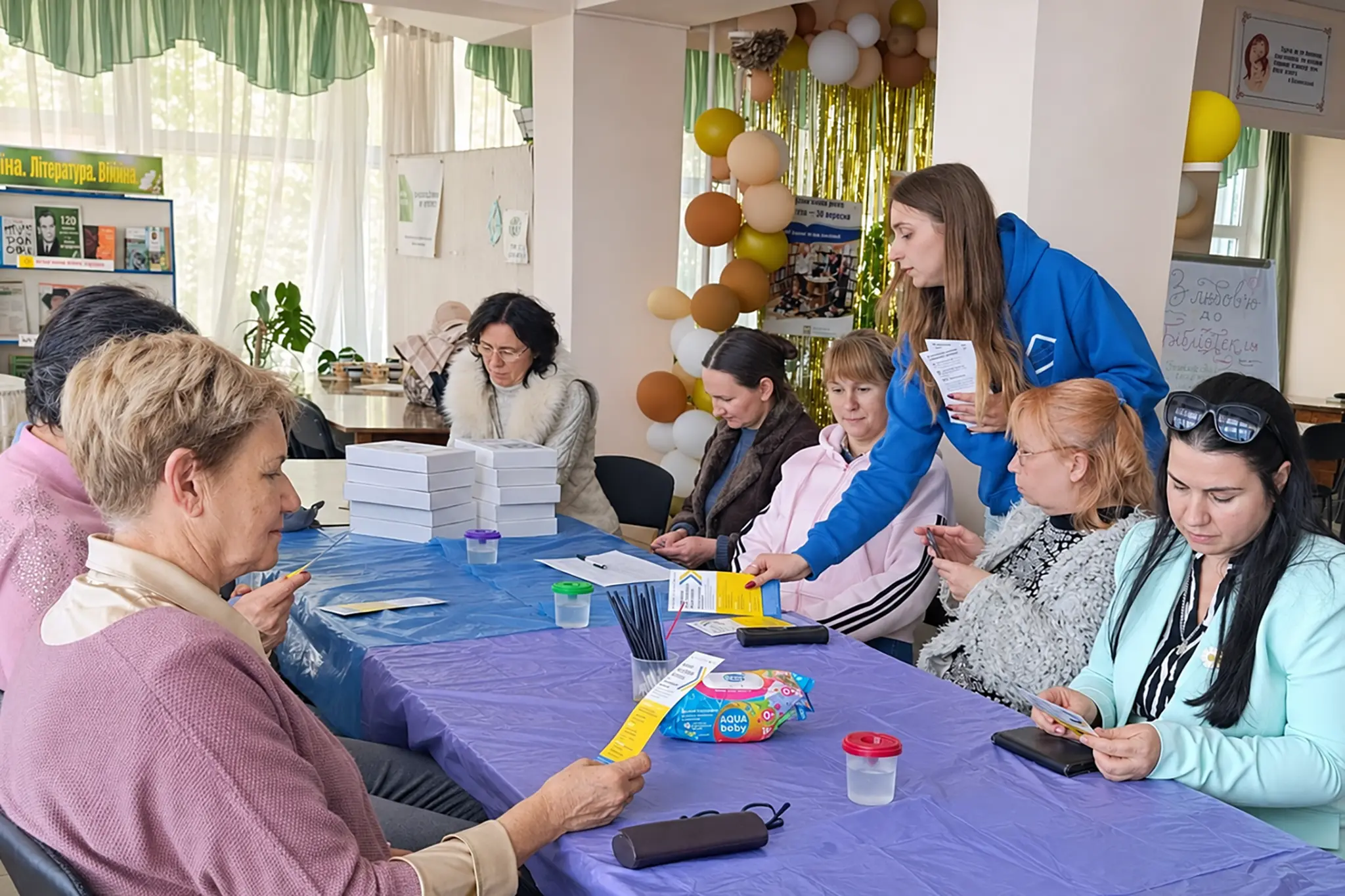
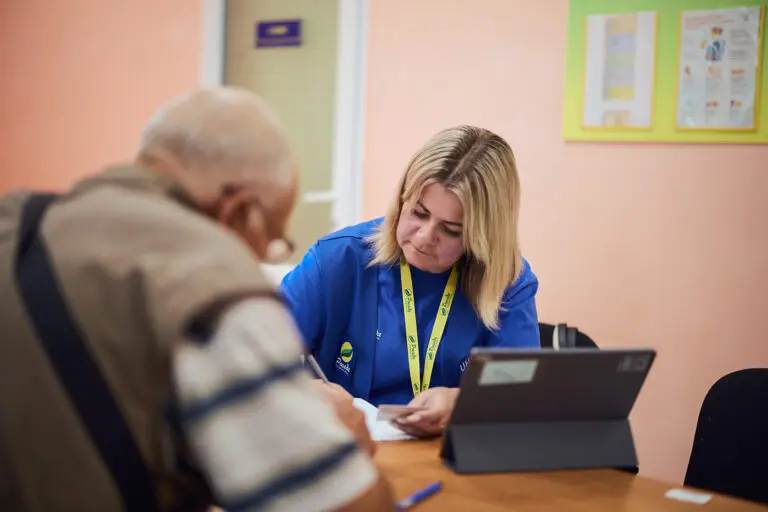
Many requests from visitors concerned documents, social payments and the protection of their rights. The lawyer helped correct discrepancies in personal data that prevented a person from obtaining IDP status and receiving payments. Other visitors came because of delays in pension recalculation or after falling victim to fraudsters. The specialist explained the procedure, prepared applications and advised how to record the circumstances of the offence and file a report. This helped people navigate the procedures and start resolving their issues.
To provide high-quality help, the team keeps learning. During the month, the specialists studied the specifics of psychological work with people who have experienced isolation and deepened their knowledge of the psychology of communication and age-related psychocorrection.
Yuliia Bakina,
coordinator of the Survivor Relief Centre in Sumy
“We don’t only work on site. This month we received a request to work in communities, because not everyone who needs help can reach the regional centre. Moreover, not everyone knows about specialised support services or is sure they can come to us with their situation. The Centre’s specialists help people make sense of everything.”
Poltava
In October, the team of the Survivor Relief Centre advised 360 visitors. This included social and legal assistance, psychological support for adults and children, and case management.
A significant share were repeat visits. Specialists continued working with people who needed further solutions, clarified their needs and identified next steps.
Protecting the rights of people who have survived captivity remains a separate area of work. The Centre’s lawyer advised them and helped prepare and submit applications for extracts from the Unified Register of Pre-trial Investigations. She also supported the submission of claims to the International Register of Damage in the categories “Sexual violence”, “Disappearance of an immediate family member”, “Serious personal injury” and “Deprivation of liberty”. This makes it possible to document the harm caused and use the available mechanisms for protecting rights.
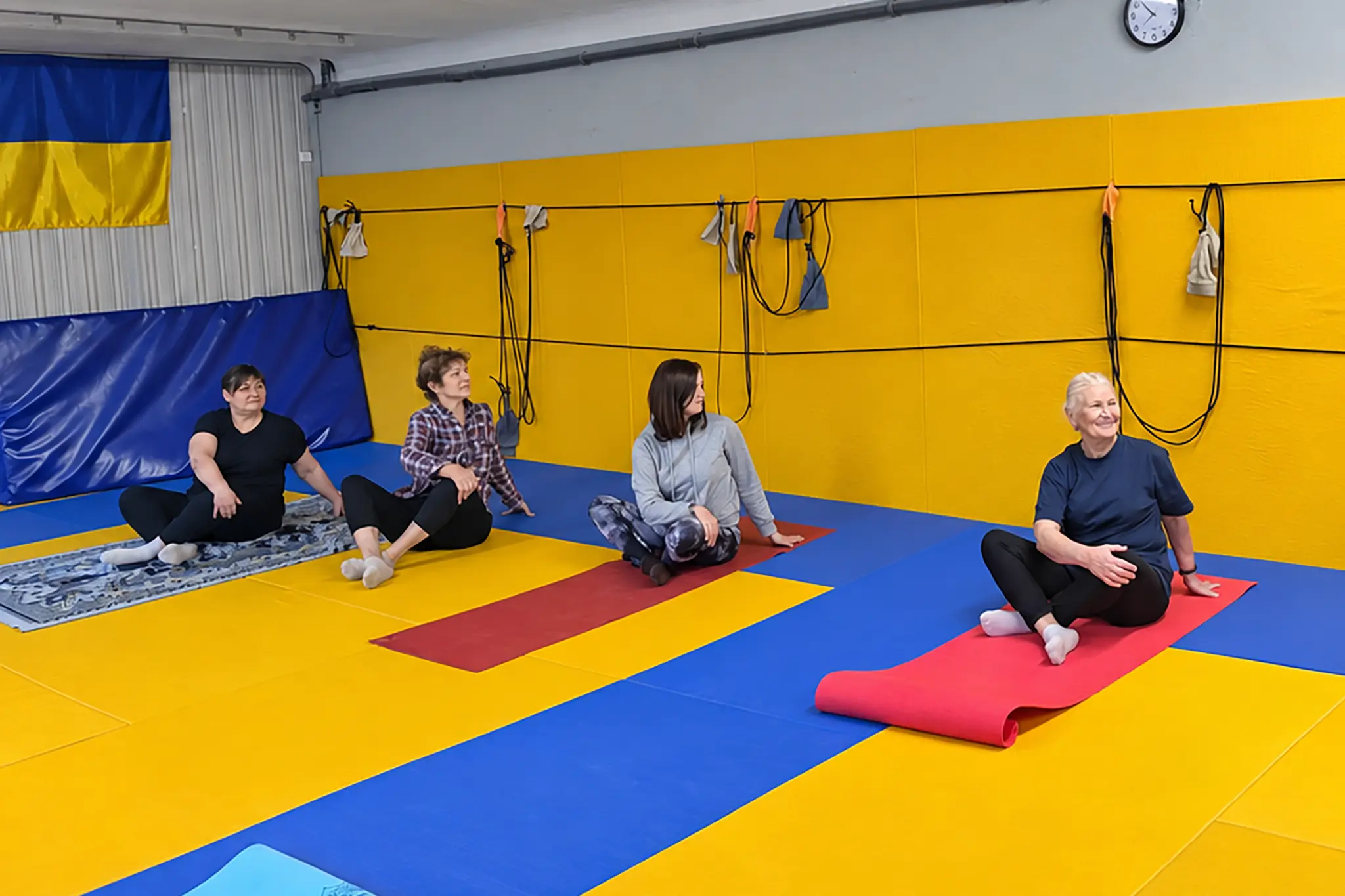
The Centre also regularly holds group activities and trainings. In particular, there were sessions using body-oriented therapy methods and meditative practices. Participants developed self-regulation skills and learned to recognise body signals and muscle tension. They say the sessions help reduce stress and achieve psycho-emotional balance.
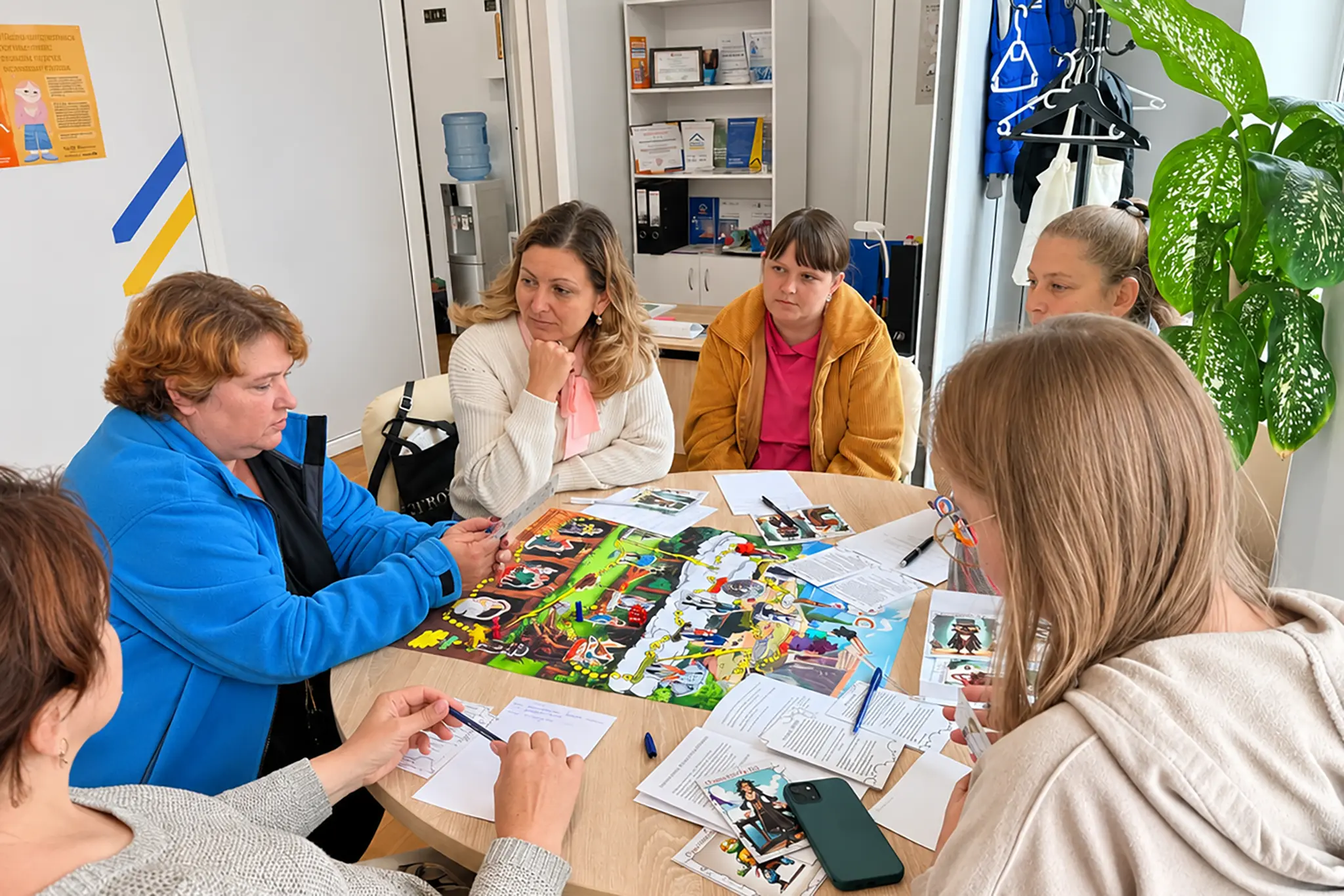
Women explored questions of their personal and professional future during the psychological game “Power Inside”. The game format helped them look at their difficulties from a different angle and find ways of supporting themselves and new options for action.
For teenagers, the team held the training “Psychological compass: recognise your state – find your bearings”. Participants learned to analyse their emotions in a crisis, openly shared their feelings with peers and discussed adapting to a new place. Particular attention was paid to how to support each other in difficult times.
The Centre’s team also worked with students, among other things organising sessions on preventing gender-based and domestic violence.
Kateryna Babinchuk,
coordinator of the Survivor Relief Centre in Poltava
“Every person who comes to the Centre has their own story and their own needs, so we build our help comprehensively: legal support, psychological and social support, group sessions. Many people come back to us and bring their relatives or friends. For us, this is a sign that the Centre has become a place for local residents where they can find support.”
Kharkiv
In October, the Survivor Relief Centre provided over 240 consultations.
During the month, 11 psychological and legal awareness sessions took place. They focused on personal safety, preventing violence and recognising violations of one’s personal boundaries. With children and young people, the team talked about recognising violence and communicating without it, about personal boundaries, dreams and inner resources. They also discussed human rights, official employment and the risks of labour exploitation, personal safety and available ways to get help.
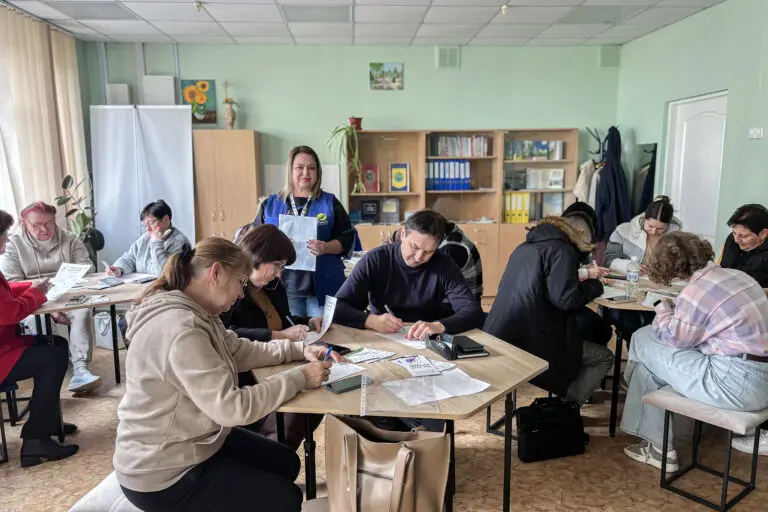
For adults, the team held a group legal consultation on protecting rights and a meeting on emotional balance and adapting to life in wartime.
In parallel, the team strengthened its professional knowledge. The specialists were trained in working with war trauma and trauma-informed planning of assistance, learned the procedure for recognising people as survivors of conflict-related sexual violence, and completed trainings on safe behaviour under drone threats and on first aid.
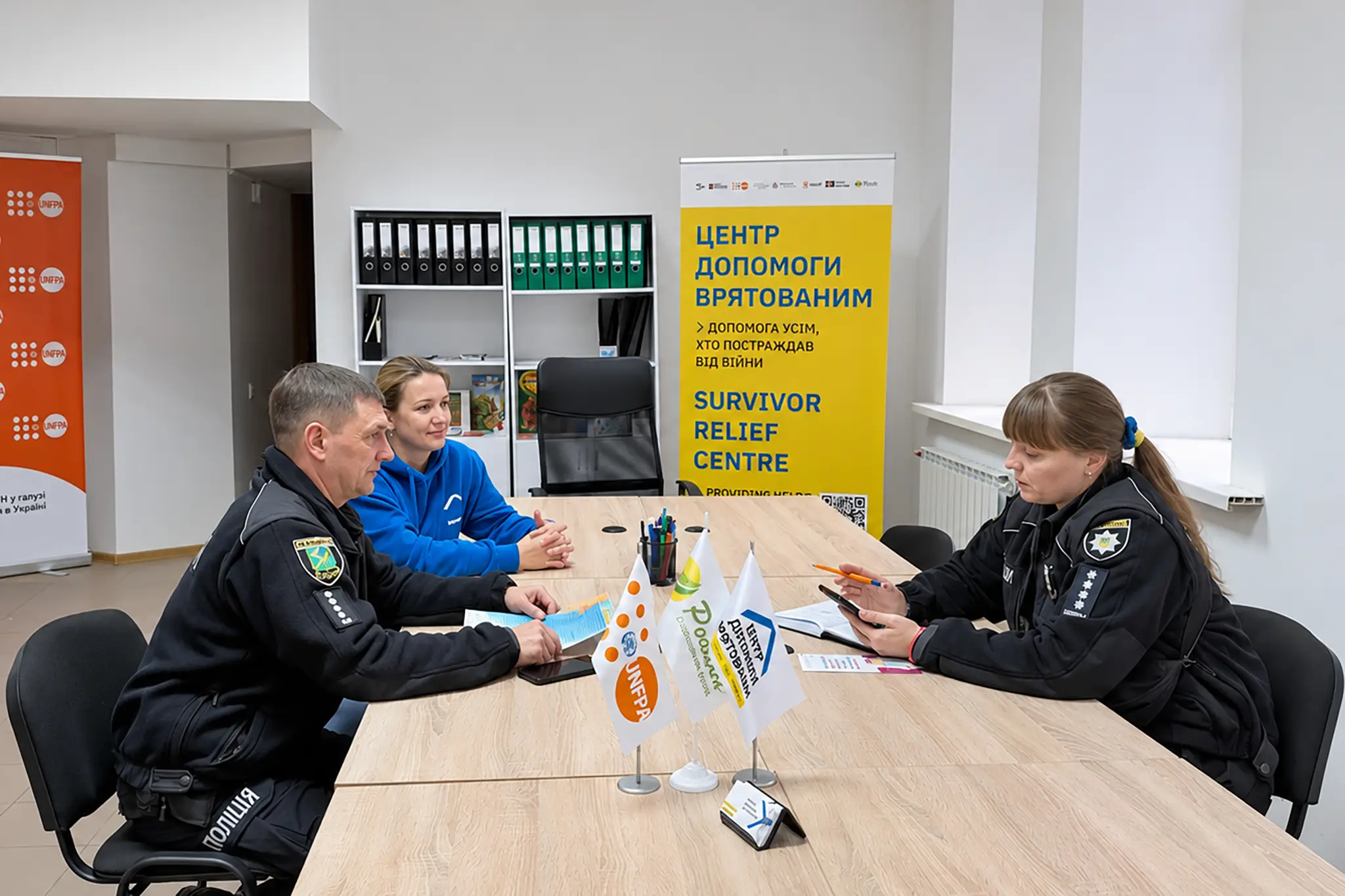
The Centre’s coordinator Olena Kyrychuk took part in a meeting of the Subnational Protection Cluster, which discussed the work of transit centres, the transportation of evacuees, support for temporary accommodation sites and the coordination of humanitarian aid. The team also took part in a coalition meeting with the Government Commissioner for Gender Policy on cooperation between organisations in protecting the rights of survivors. At the end of October, the Centre’s staff met with representatives of the patrol police to discuss responding to cases of violence and referring people to support services.
Olena Kyrychuk,
coordinator of the Survivor Relief Centre in Kharkiv
“A person who has survived violence should not have to search for help in the dark. That is why we keep building links with the police, government services and partners. The better coordinated our work is, the faster a person receives protection, legal and psychological support and more.”
The Survivor Relief Centres in Sumy, Kharkiv and Poltava were established on the initiative of the Office of the Deputy Prime Minister for European and Euro-Atlantic Integration, with the assistance of the Government Commissioner for Gender Policy, in partnership with UNFPA, the United Nations Population Fund, with the financial support of the governments of Austria, Belgium, Spain and Sweden, in cooperation with local authorities and the Rokada Charitable Foundation.
UNFPA, the United Nations Population Fund, is the leading UN agency focusing on gender equality, reproductive health and youth capacity building. Together with its partners, UNFPA works in 150 countries and territories worldwide, including Ukraine since 1997.
More information about UNFPA and its work in Ukraine: https://ukraine.unfpa.org/en