Social adaptation in action: Kherson region family managed to build a new life in Ternopil
Today, Nelia Kalinina’s family lives in Ternopil. This is more than 800 kilometres away from their native home in the Kherson region. From their past life, they managed to save only happy memories and a few bags of essentials grabbed during the 2022 evacuation
The family met the Rokada team in a shelter for internally displaced people. Nelia says that over the past three and a half years, almost the entire local hub has played a part in her family’s fate.
“Social workers, psychologists, drivers… Each individually and all together became a part of the lives of our family and others. Such support inspired faith and the courage not to sit back but to take action,” says Nelia Kalinina. “We lived in the shelter and could only quietly dream of our own home. But the charity foundation’s staff kept telling us that everything would work out.”
And just a few months ago, the Kalinins actually made it happen – the family purchased their own home.
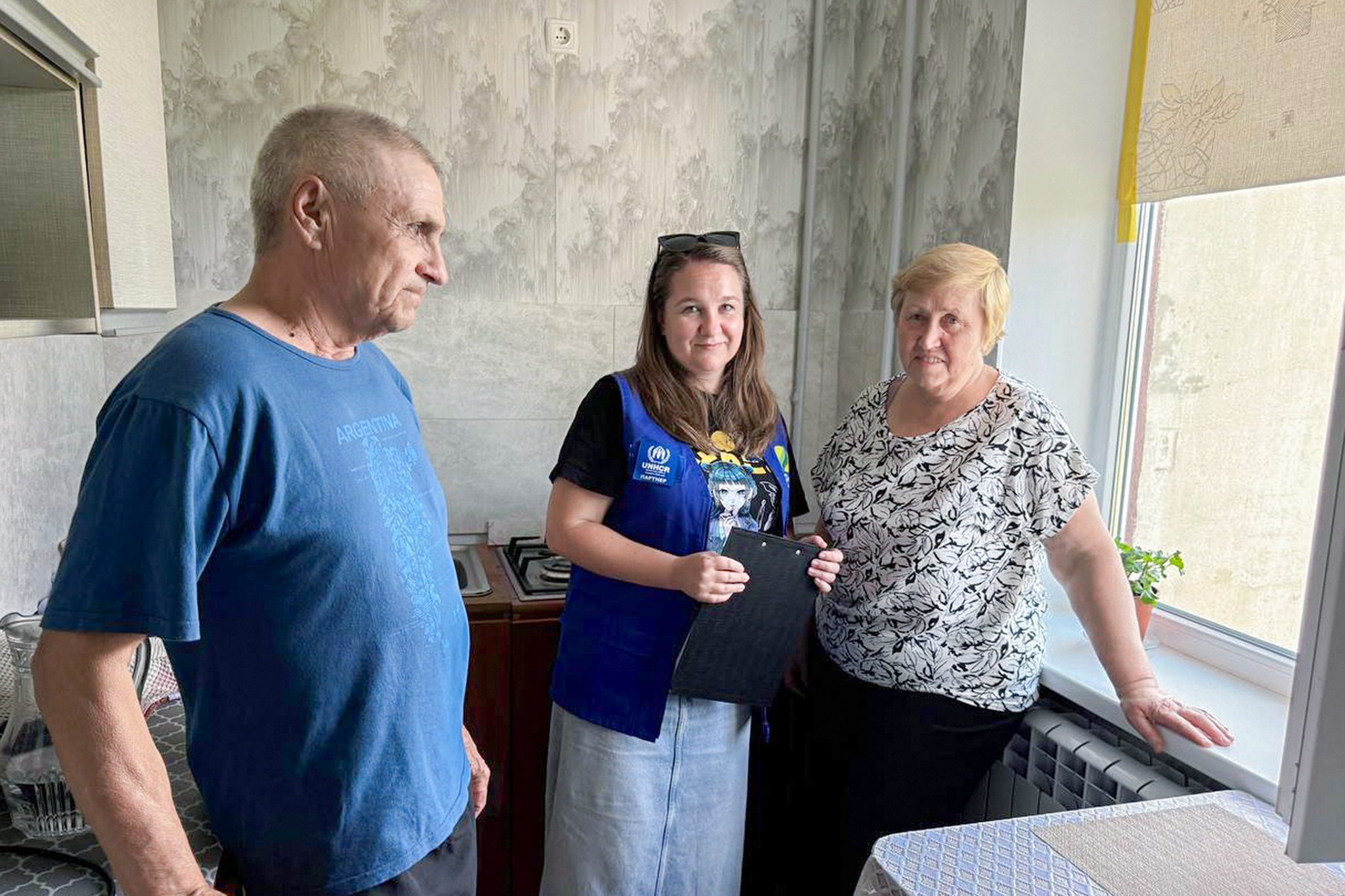
“Yes, since April we have been setting up our one-room apartment in Ternopil,” Nelia says happily.
The woman says it was the support of psychologists, social workers, and lawyers that helped turn their dream into reality.
“We will help,” “we will support you,” “we won’t leave you alone in your trouble” – this is what I heard every time I reached out to Rokada. We received legal consultations regarding our documents, and a social support specialist was practically assigned to us. We felt and continue to feel this support, and it is incredibly valuable,” she continues, adding that the foundation also helped them furnish their home.
Maryana Kravchuk, a social worker at Rokada’s Ternopil hub, notes that this interaction with the displaced family is part of the social adaptation process. The Ternopil region is one of eight areas where the project is currently being implemented.
“The project’s mission is to help displaced Ukrainians become more self-reliant and return to a normal social life outside of temporary shelters. Beyond the Ternopil region, the project spans Volyn, Zhytomyr, Ivano-Frankivsk, Lviv, Rivne, Khmelnytskyi, and Bukovyna,” explains Olena Demirska, coordinator of social support and protection at “Rokada.”
Over the six months of implementing the social adaptation project, Rokada has achieved fifty successful cases, including the achievement of the Kalinina family.
“For us, every story is special. But speaking specifically about this family, we must note that despite their advanced age, the Kalinins have not lost their desire for change. They actively participated in the life of the Vyshnivets community while living in the shelter. Nelia engaged in self-governance processes, advocated for the shelter’s interests, and later became a member of the IDP Council. Our task was to support them on their path toward a sustainable solution and to help where their own resources were insufficient,” continues Maryana Kravchuk, a social worker at “Rokada’s” Ternopil hub.
Next week, Nelia Kalinina starts a new job. She will work as a maintenance worker at a university dormitory.
“This is only the beginning…” she is convinced.
The project for the social adaptation of displaced Ukrainians is implemented with the financial support of UNHCR Ukraine – the UN Refugee Agency.