
First step to independence: Social adaptation programme helps displaced woman integrate in Ternopil
Normal life in the village of Prosyana in the Dnipro region had to change in a single day. When their home ended up in a combat zone, the Krasilnikov family quickly decided to flee. They saved themselves, and saved their little dachshund too. At the time, in the spring of 2025, neither Nataliia, nor her mother, nor her husband suspected that life would change in an instant.
What followed was evacuation, the Ternopil region, and a shelter for dozens of other internally displaced people.
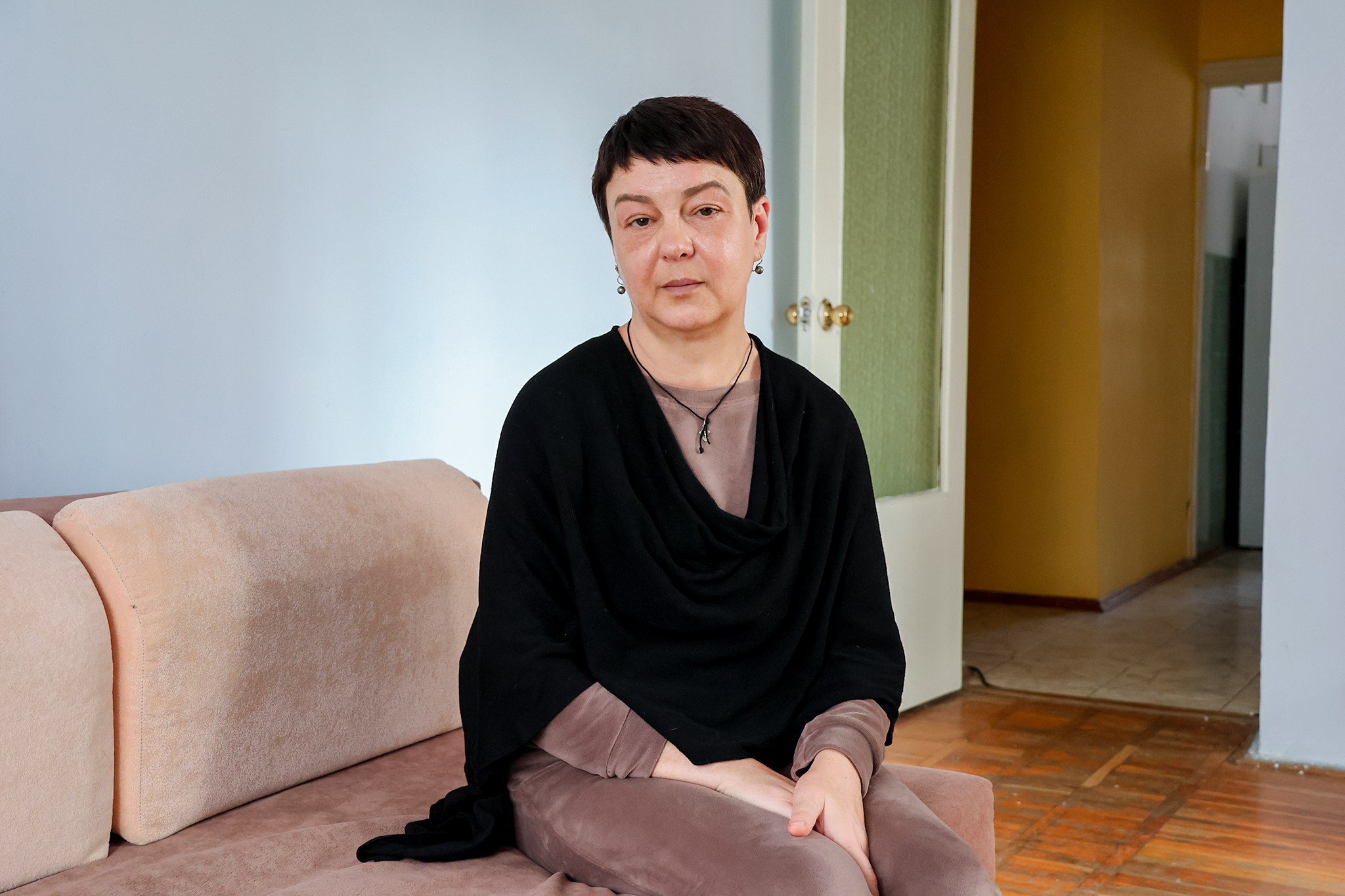
“Nobody wanted to rent a place to us because of the dog,” states 51-year-old Nataliia Krasilnikova, recalling last year and her desire to move from the shelter into a rented apartment.
In the end, Bonya was taken in by a local family from Ternopil.
“She is being cared for by a wonderful family now. Although it was an incredibly difficult decision, we trusted these people,” Nataliia continues, showing photos of Bonya on her phone. She says that being separated from her dog is still hard even now.
However, the ordeal did not end there. First, she lost her mother, and shortly after, her husband.
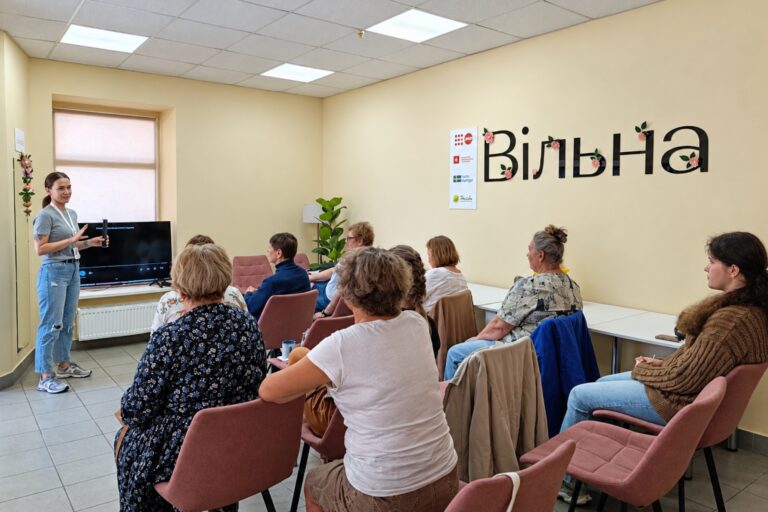
“We met Nataliia at the shelter. Our team works there often. Lawyers, psychologists, and social workers provide comprehensive support,” says Maryana Radkovska, senior social worker at the Rokada regional office in Ternopil. “Overall, we oversee four temporary accommodation centres in the region as part of the social adaptation project.”
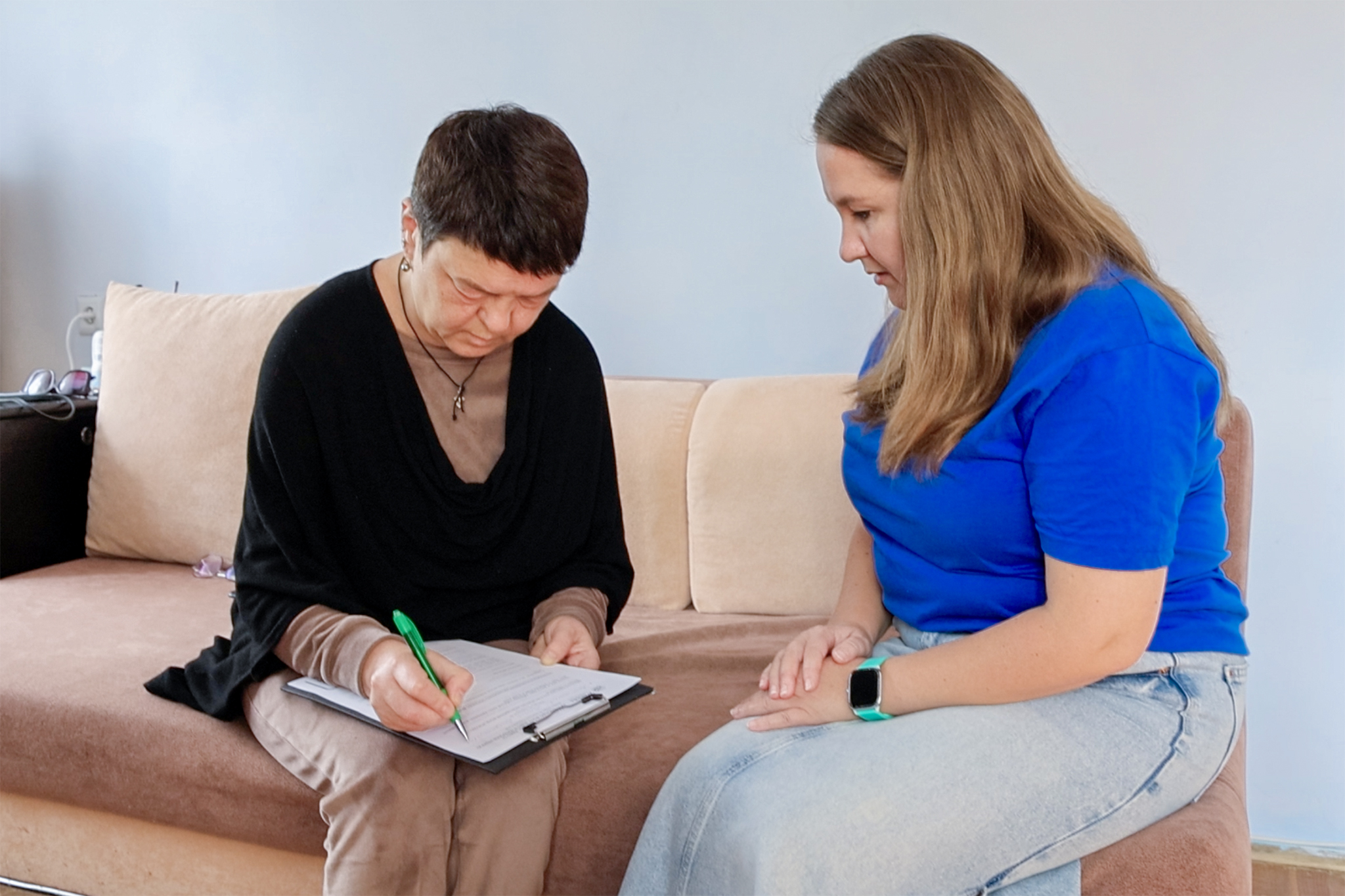
“When the representatives from Rokada visited us, it was like a balm for the soul,” confesses Nataliia Krasilnikova. “We talked, and sometimes, like children, we would draw or sculpt things… Mentally, it was incredibly hard, but they supported us as much as they could. I don’t know how I would have survived it all.”
Ever since the evacuation, the woman’s greatest dream had been to find a home of her own, a place where she could feel like the lady of the house. So, when she heard about the social adaptation programme, she signed up for their support right away.
“The foundation’s specialists become the anchor that people who have lost their homes so desperately need. I lost not only my home, but also my nearest and dearest. Thanks to these women, I realised that I can and must move forward, and that I have someone to turn to. It means the world to me,” says Nataliia.
The social adaptation programme offers internally displaced people a chance to receive comprehensive support from Rokada’s specialists on their journey to integrating into new communities.
“This involves a large set of measures that help adaptation in a new place happen more smoothly and, at the same time, confidently. But at the core of this work, the most critical element is that individuals themselves must show interest and strive for change in their lives. Yes, due to the stress they have endured, it is mentally very difficult for many to take such a step, but we work with this, we advise, and we guide them,” notes the senior social worker.
Today, Nataliia Krasilnikova lives in her own apartment. The woman has already taken the first step towards independence. The next one is finding employment.
“She managed to rent the apartment through a specific housing rent compensation programme for internally displaced families, funded by UNHCR, which also provides financial assistance for utility bills for six months. In parallel, we are continuing to look for employment options together. For now, the employment centre cannot offer any vacancies, as Nataliia has a disability. However, neither she nor our team is losing hope. We are convinced that everything will work out and she will be able to feel financially secure and independent,” Maryana Radkovska concludes.
If you or your loved ones live in a shelter and are seeking change, contact Rokada. The social adaptation programme is implemented with the financial support of UNHCR Ukraine – the UN Refugee Agency in Ukraine.