
‘I dream of planting an orchard just like in my home village’: The story of Nataliia Demchuk from the Kherson region
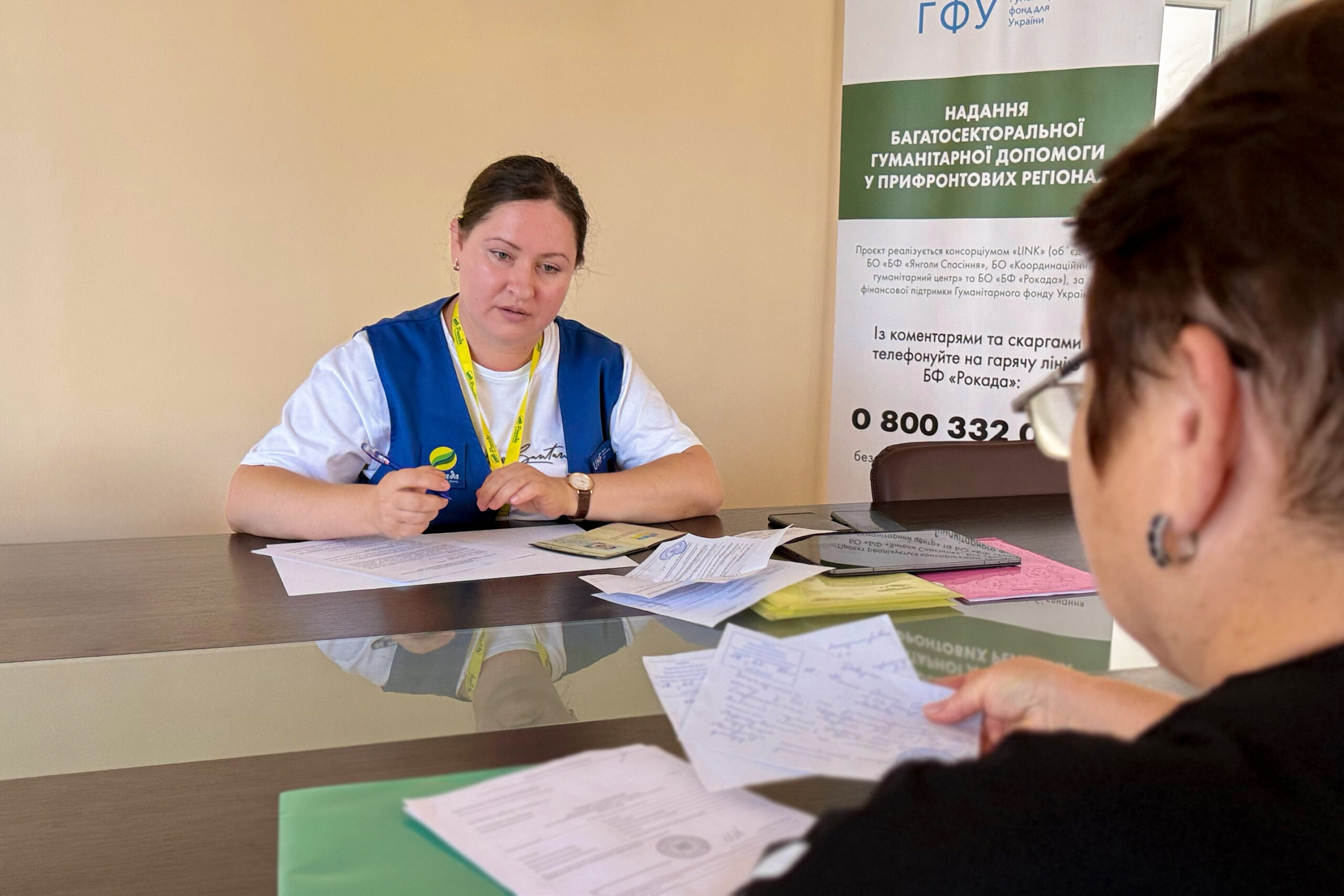
Nataliya Demchuk points to a map, where a blue dot marks her home in the Kherson region. Or rather, what’s left of it – the foundation and warm memories of life before February 2022. Today, the woman has come to register her mother, who has limited mobility, to receive financial assistance from Rokada, provided under the LINK consortium. Ms. Nataliya explains that they settled in Smoline, Kirovohrad region, a year ago – in her home region, the constant Russian air attacks had been growing closer and more dangerous.
“Our village is on the right bank – since March 2022, we have seen it all: the barrel of a Russian rifle pointed at our heads, interrogations, phosphorus bombs… But we didn’t give up! If only you knew how the Kherson region engaged in partisan resistance… I am proud of the people who, despite fear and danger, risked their lives just to keep everything Ukrainian on our native land,” the woman says.
Ms. Nataliia says that before the full-scale invasion she had a small business – her own shop, where she sold everything that might come in handy in a village: from food to household items.
“We had a large orchard where we grew fruit – harvesting peaches, nectarines, pears, and plums… So we started small and then expanded the assortment more and more so that people could come and buy what they needed,” the woman recalls. “After the village came under occupation, we had to shut down the business.”
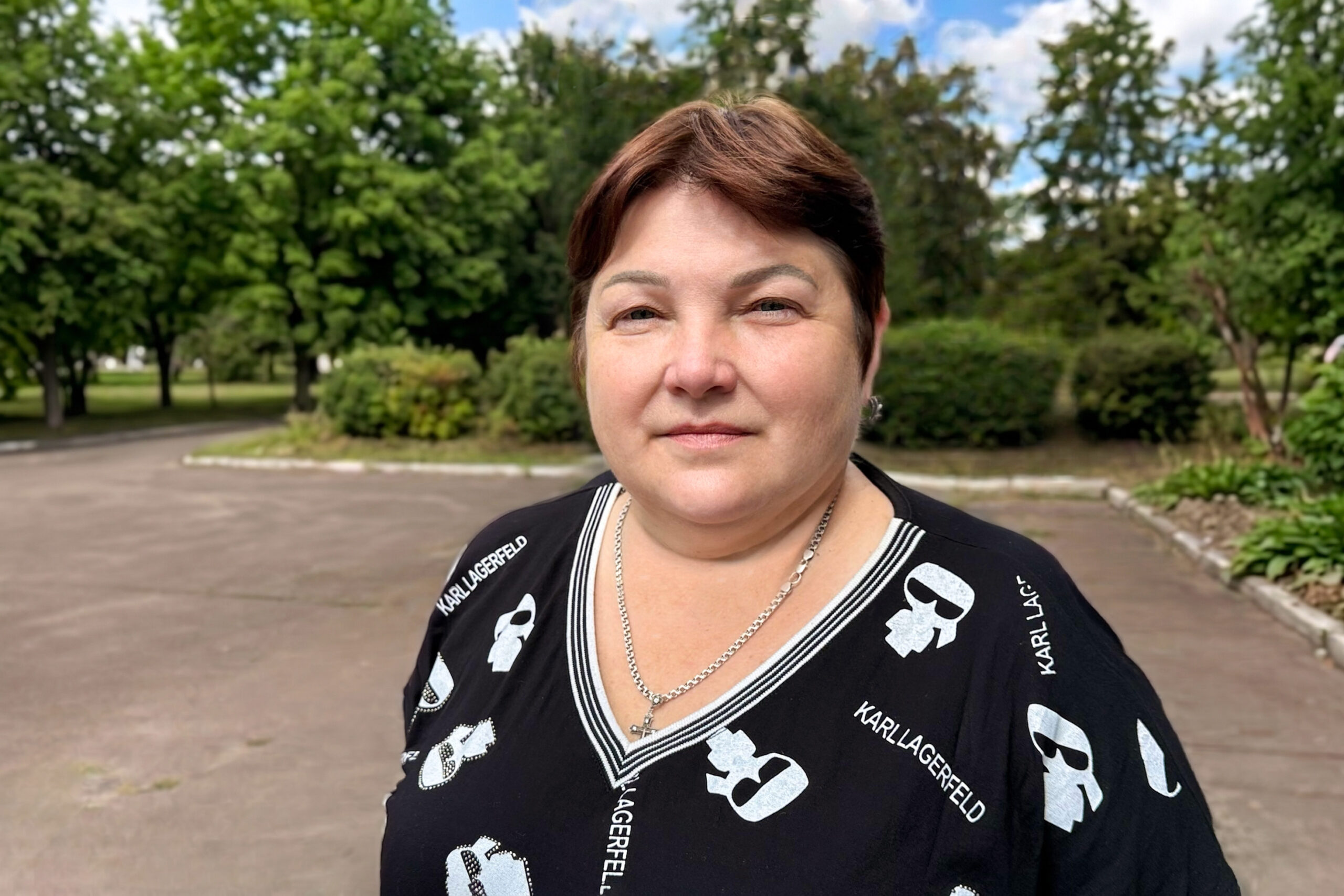
She also used to sing in a folk group, where most of the members were senior citizens.
“Our group mostly consisted of people over seventy. But back then, when I was only in my forties, I felt so good with them – they were wonderful people and performers. We took part in various festivals and fairs, and joined in the celebrations,” shares Nataliia Demchuk. “And right here, we were performing in Kherson. It was exactly during the Christmas holidays.”
Ms. Nataliia admits that she misses those times very much.
For the first time, they had to leave home when it became extremely dangerous in her native Lvhove. It was the end of December 2022. The family packed the bare essentials and traveled 15 kilometers away – to the neighboring village of Virivka.
“After another shelling, we started looking for a car to get us out from under the ‘Grad’ rockets. We hired an old ‘Zhiguli’ with a trailer, loaded a ton of fuel briquettes into it – because we were heading into winter, and who knew what it would be like there. From home, we only took a bit of clothing and one pot,” the woman continues her story.
At that time, the new neighbors couldn’t believe that the security situation was so difficult just fifteen kilometers away. Ms. Nataliia says that, of course, she wouldn’t want people to experience what her family went through, but the Russians later began to attack the Kherson region more and more.
There was not much time left until the next evacuation. In the meantime, the woman took up a new activity.
“There was a small shop there. I got to know the owner and suggested baking pies for sale. But after a while, Virivka started getting shelled heavily. The owner of the shop decided to leave with her children, and since we were staying, she asked me to step behind the counter. That is how I took care of her business,” shares Nataliia Demchuk.
But the security situation kept worsening. By that time, the shop owner had already bought a house in the Kirovohrad region and invited us to join her. That is how we ended up here last year.
Today, Ms. Nataliia takes care of her mother. The woman’s entire family has been abroad for a long time.
“My mother has a complex femoral neck fracture. She has severe mobility issues, so she needs care. For now, we are renting an apartment, but earlier we applied for a housing certificate for our lost property. So we are waiting to buy a place of our own here,” she says and adds that her dream is to plant a fruit orchard here, just like back in her native village.
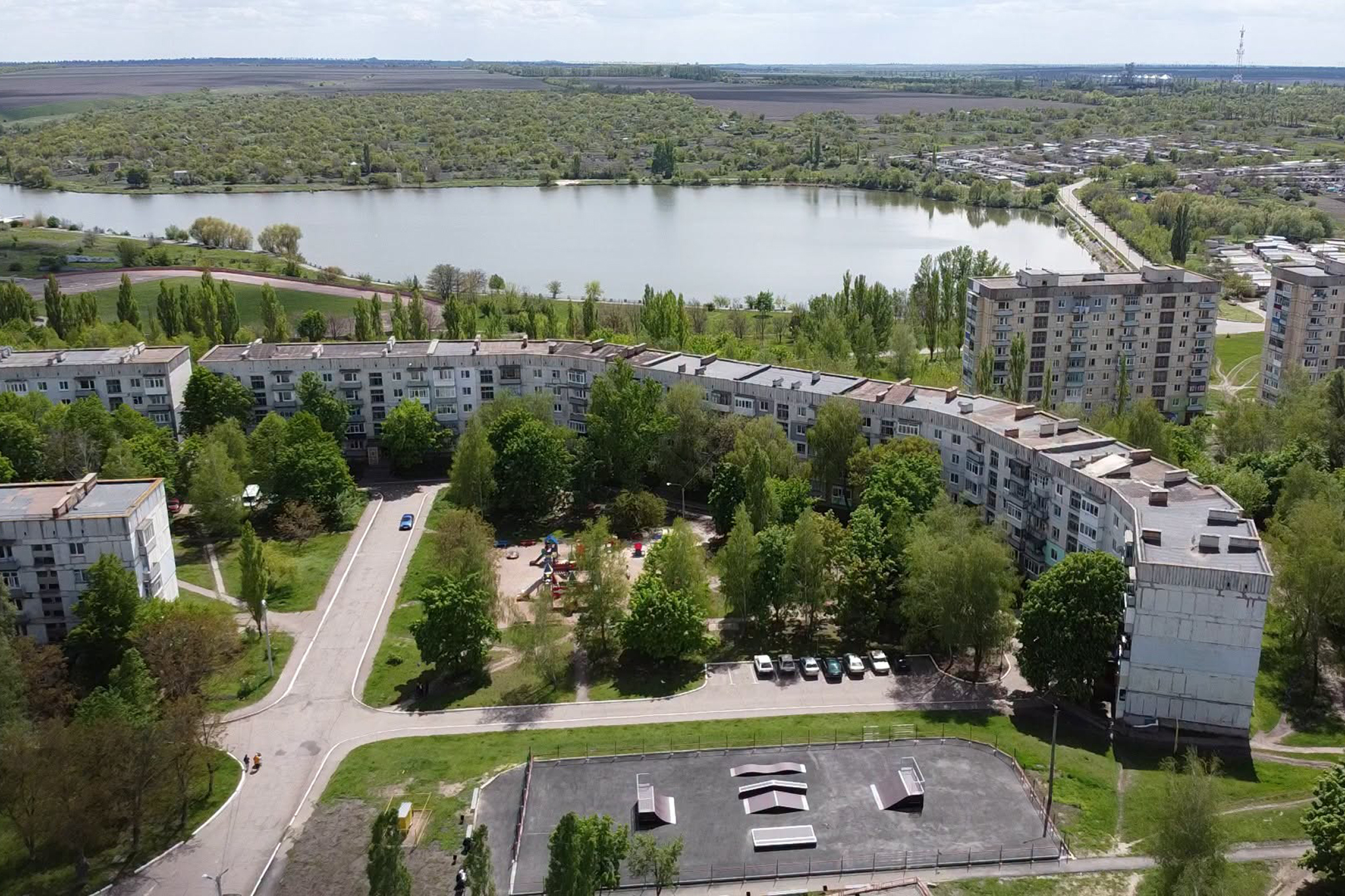
In addition, Ms. Nataliia was interested in local creative ensembles to pour out at least a bit of what was on her heart through songs.
“For now, I cross-stitch,” she says and admits in a whisper. “I am also writing a book about what we had to endure during the occupation. It is for my family. I want my grandchildren, their children, and all future generations to know the truth and the price we had to pay to fight for Ukraine.”
The project is being implemented by the LINK consortium (a coalition of the Charitable Foundation Angels of Salvation, the Coordinated Humanitarian Center, and the Charitable Foundation Rokada), with financial support from the Ukraine Humanitarian Fund.