
The Rokada Charitable Foundation is implementing a project supported by the Italian Agency for Development Cooperation, in partnership with the Bukovina Agency for Initiatives and Development and Un Ponte Per ETS, in Sumy and Kharkiv regions. The project provides comprehensive, cross-sectoral, and individualized support to people affected by the war, with a particular focus on survivors of gender-based violence, internally displaced persons, and other vulnerable groups.
If you need help, contact Rokada’s regional hotlines
What is gender-based violence?
This is a type of violence (an act or omission) based on social roles, stereotypes, and inequality between men and women. Children can also experience this violence.
People who have experienced domestic or gender-based violence have the right to free assistance. Ukraine has a system of services and organizations that provide comprehensive support.
These include social services, psychological counseling, and legal aid. All services are provided free of charge, confidentially, and with due regard for the survivor’s safety.
It is important to remember that violence is never the norm and can never be justified. Responsibility always lies with the perpetrator. Reaching out for help is a way to protect yourself and your loved ones.
Types of gender-based violence:
The deliberate infliction of bodily harm causing pain, injury, or a threat to life. It doesn’t always leave visible marks (bruises), but it is always an act of aggression.

The most widespread type, which is difficult to document, yet it causes deep emotional harm and destroys a person’s sense of self. This is verbal or non-verbal degradation of dignity.
A form of pressure in which a person is deprived of financial independence or means of subsistence in order to establish full control over their life.

Any act of a sexual nature committed without a person’s consent. It’s important to remember that being married or in a relationship does not automatically imply consent to intimacy.
Can occur between spouses, relatives, former partners, or people living together. It is not a one-off outburst of anger, but ongoing pressure that intensifies over time.

Establishing control over a person through systematic intimidation, humiliation, social isolation, or reputational harm carried out using internet technologies.

What to do if violence is happening at home right now,
or is ongoing?
Your safety plan
Find the safest possible spot (somewhere you can wait for help) inside your home, and identify how you can safely leave the house.
Gather originals or copies of documents: passport, child’s birth certificate, etc. Leave copies of your documents with people you trust. Make duplicate keys, and hide a sum of money, a phone with a SIM card if possible, clothing and medication for yourself and your children, and this safety plan, in a safe place.
Identify a place where you can stay overnight (a friend’s home or a shelter) if needed, and plan the route to get there quickly at any time.
Warn neighbors or loved ones about possible danger and ask them to contact the police as soon as possible if needed. Agree on a code word or signal with people you trust to indicate that you’re in danger.
Where to get help?
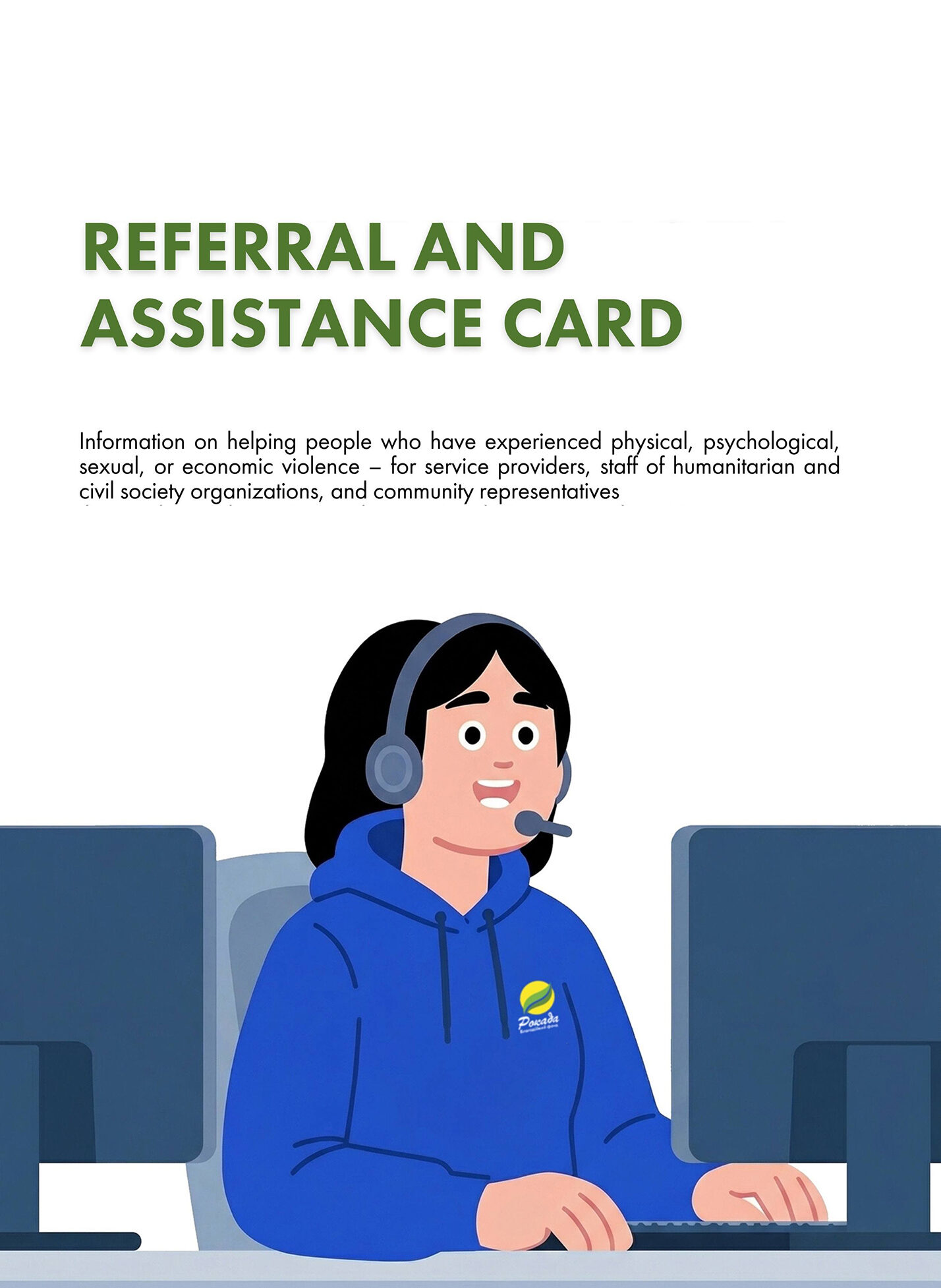
Information on assisting people who have experienced physical, psychological, sexual, and economic violence – for service providers, humanitarian and civil society workers, and community representatives

Project News
Завантаження…