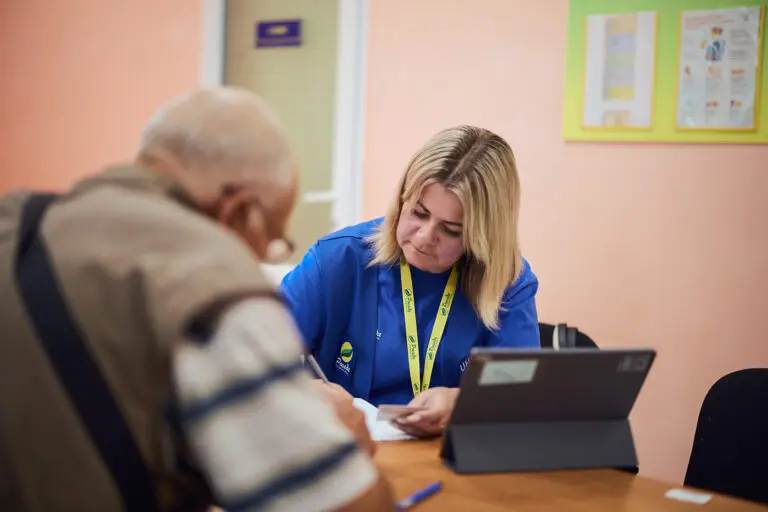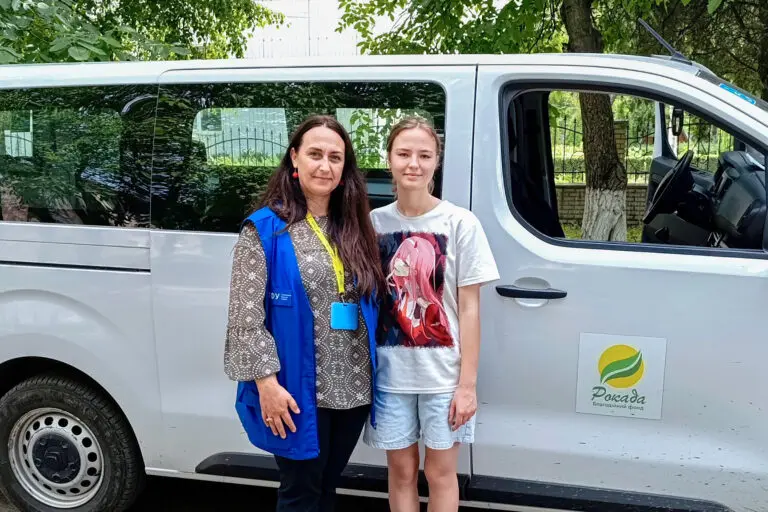

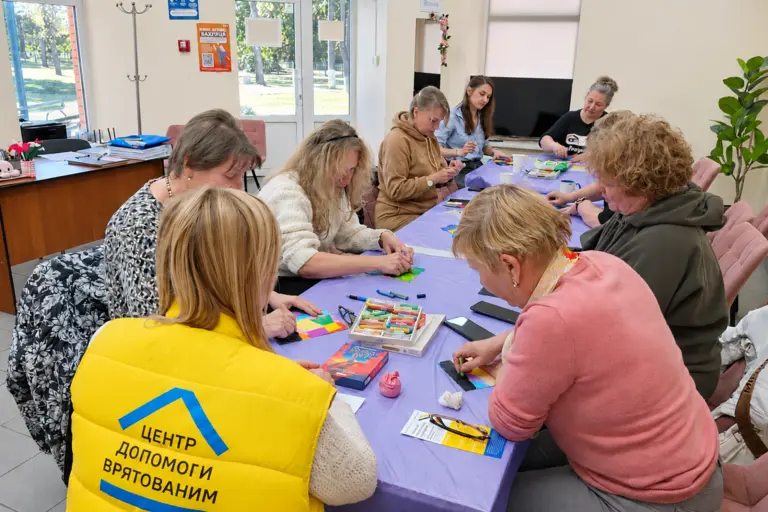
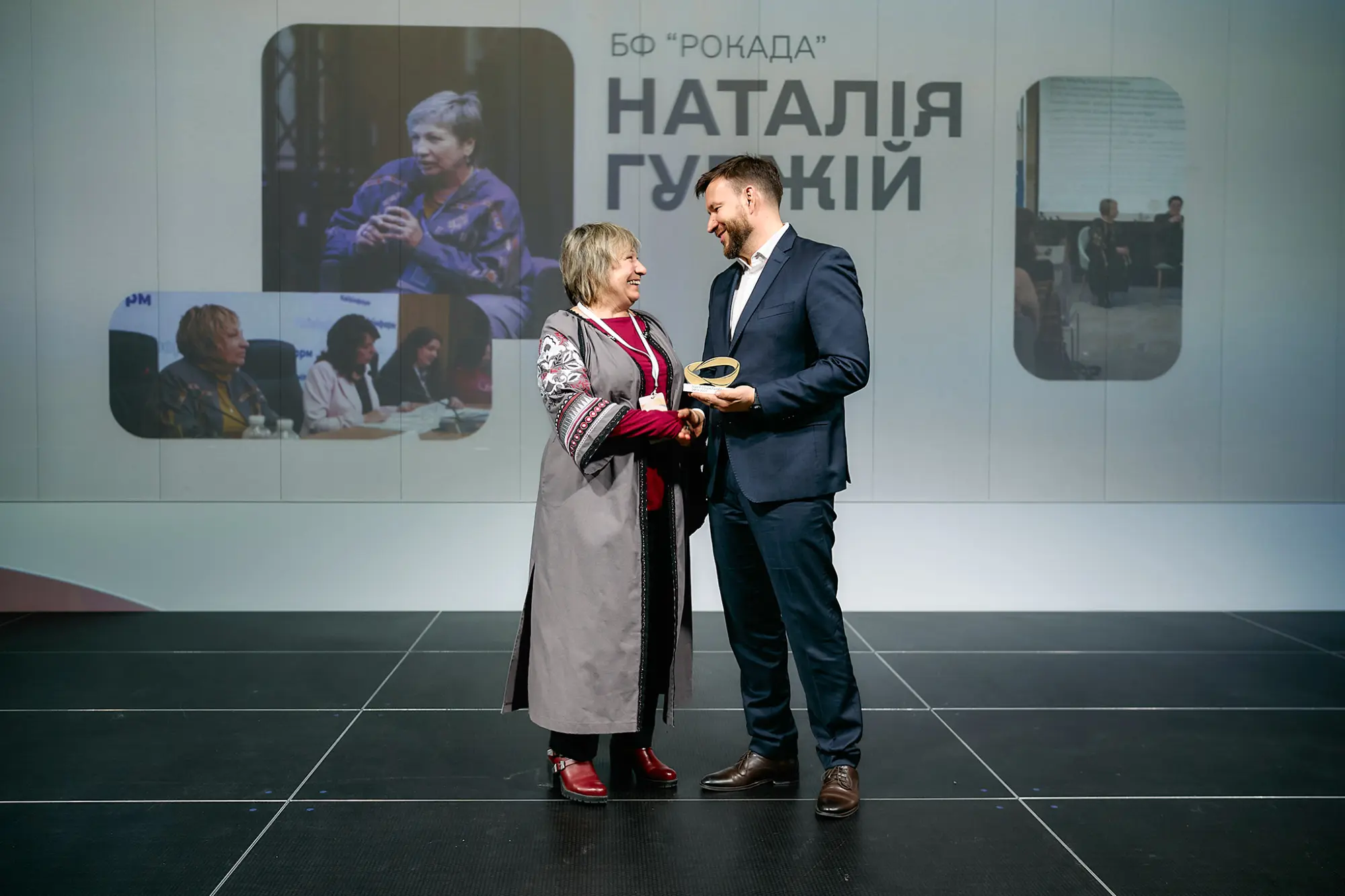
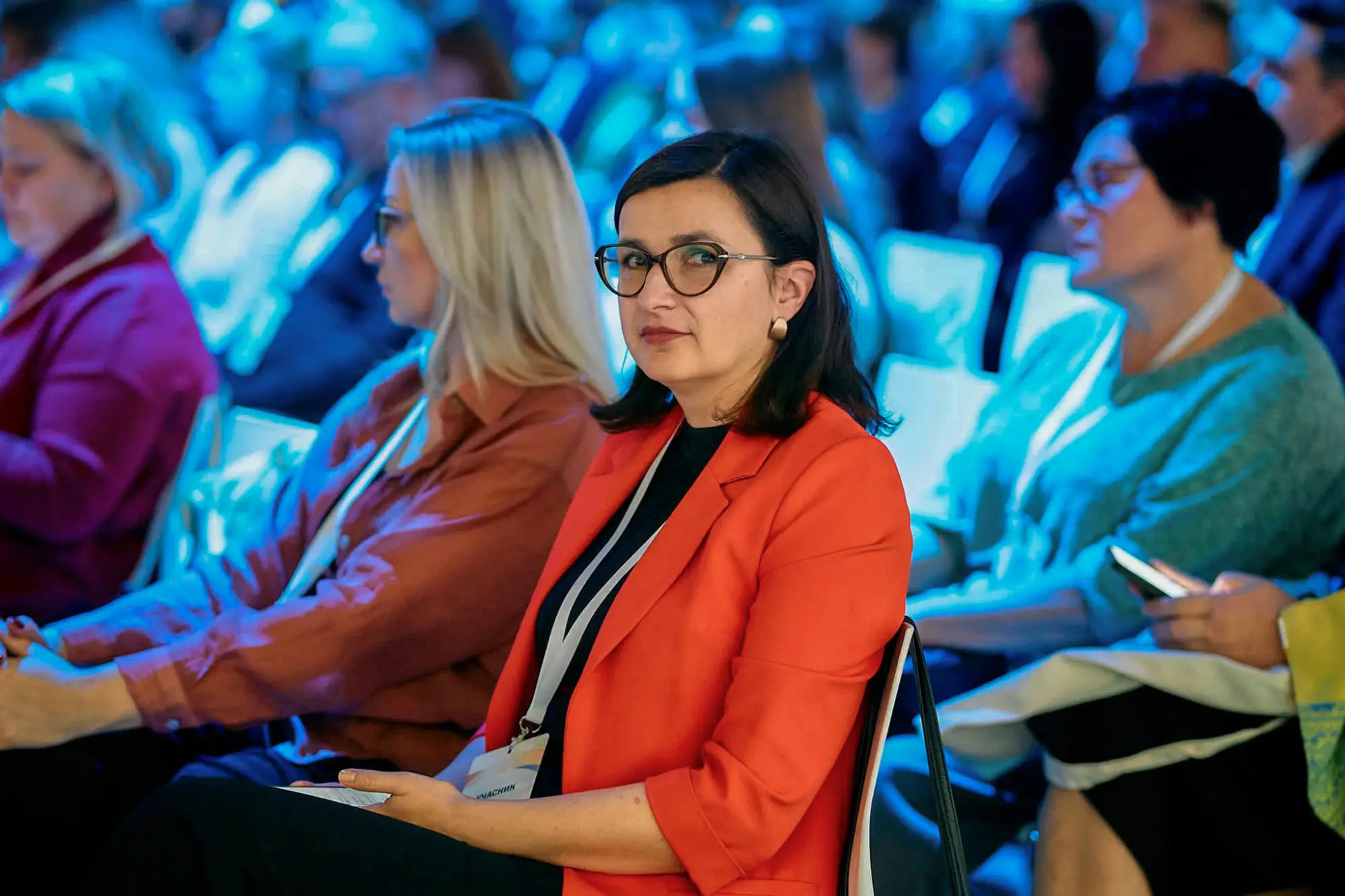
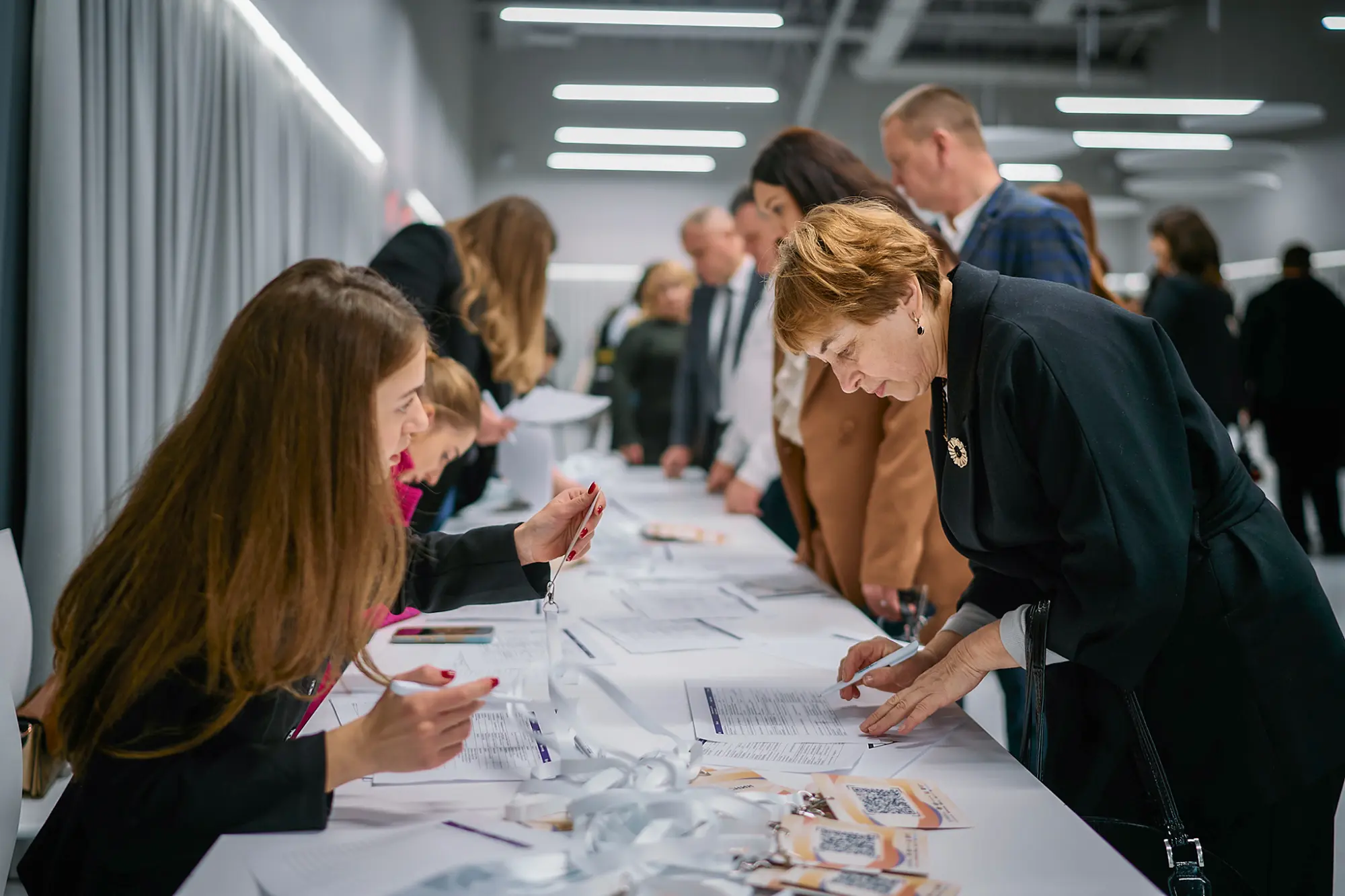
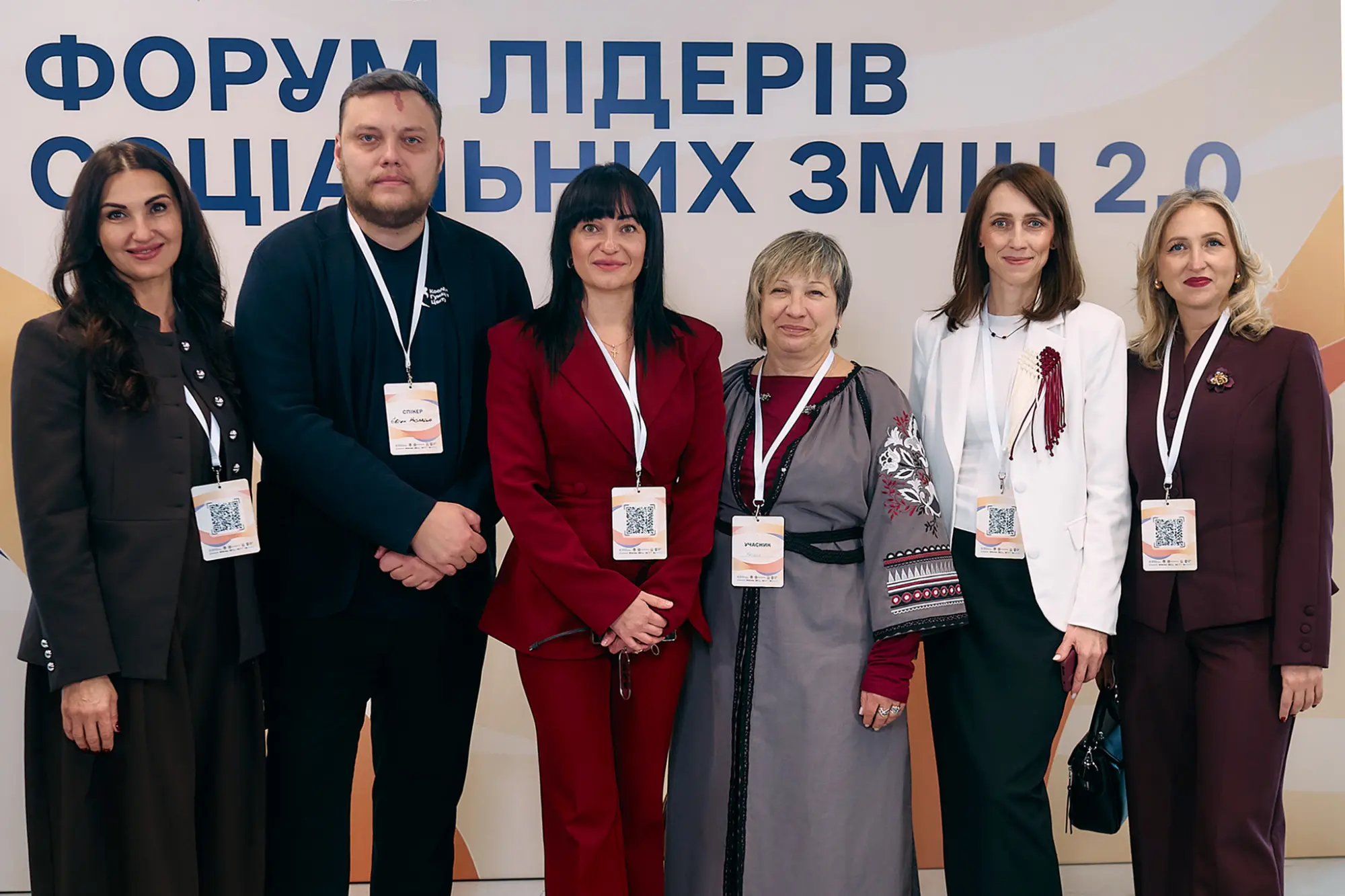
Rokada received the “Leaders of Social Change” award at a forum in Lviv. This large-scale event is organised by the Ministry of Social Policy, Family and Unity of Ukraine and, for the second year in a row, brings together hundreds of social sector professionals, humanitarian communities, civil society organisations and officials.
“Today, millions of Ukrainians need social support, and it is very important that the public, humanitarian and civil society sectors are moving in the same direction – improving people’s access to services and improving the services themselves… And in this movement we must not lose sight of the main thing: behind every request there is a real person with their own story and abilities. For more than twenty years, Rokada has been developing exactly this approach: we work as equals, side by side with communities, and complement services where people need support. We see this award as recognition of this path and of the whole team that makes it real every day,” says Natalia Gourjii, Chair of the Board of the foundation.
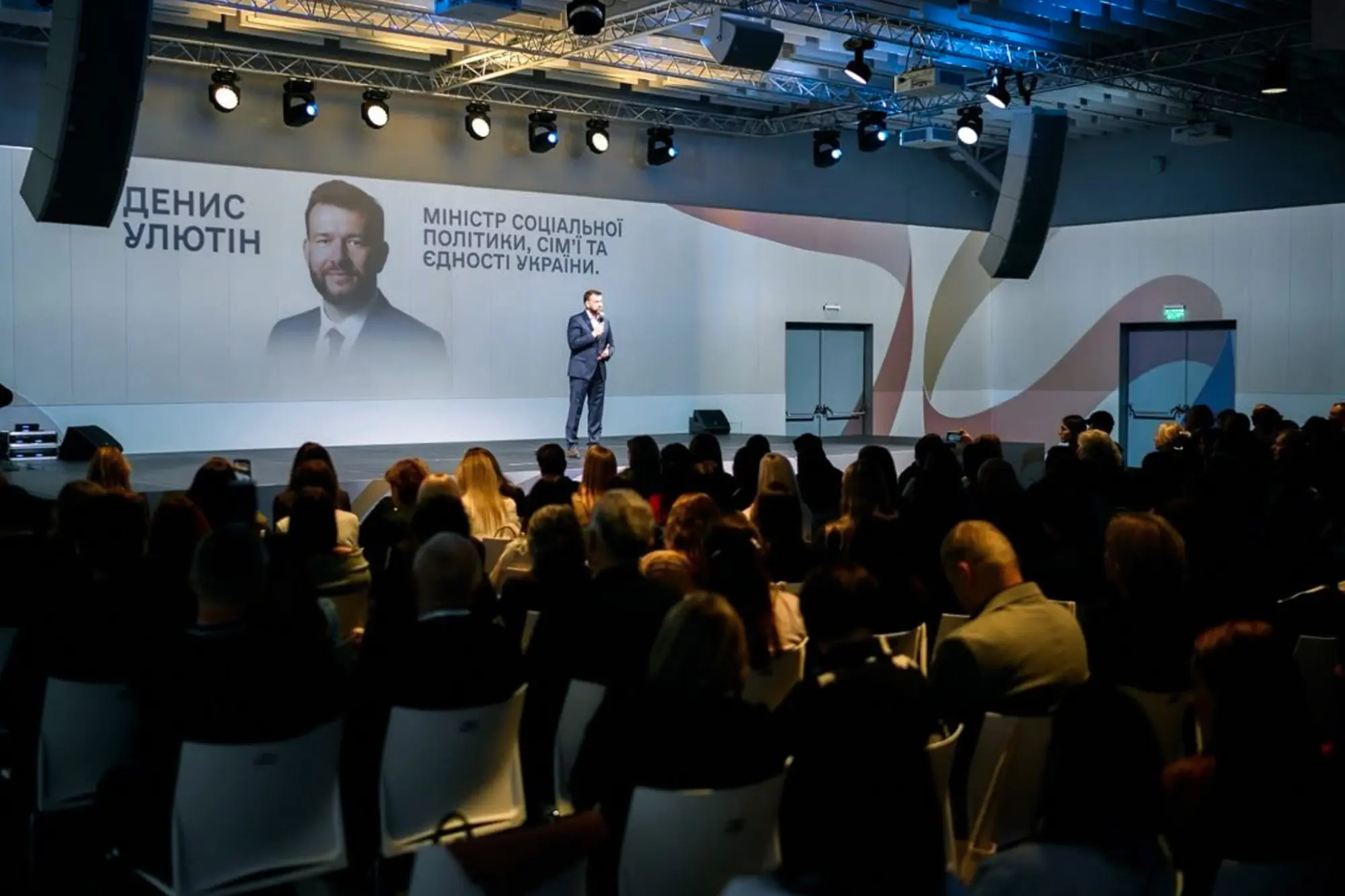
This year, the forum focused on the changes that are already happening in the social sector.
Deputy Minister Inna Solodka presented the law on basic social assistance adopted by the Verkhovna Rada in October. It combines five separate payments into one, treats the family as a single household, and links cash assistance with social services and employment support.
“The philosophy of the new approach is not only about money. It is a ‘money + services’ formula,” Inna Solodka explained.
The discussion therefore focused on how the new social assistance system will work in communities, what role the social manager will play in it, and how needs assessment will help build an individual support pathway for each person.
One area of such support is supported living. This service enables older people and/or people with disabilities to live in ordinary homes where specialists work with them every day, to remain part of the community and gradually adapt to independent living. It is an important alternative to residential institutions.
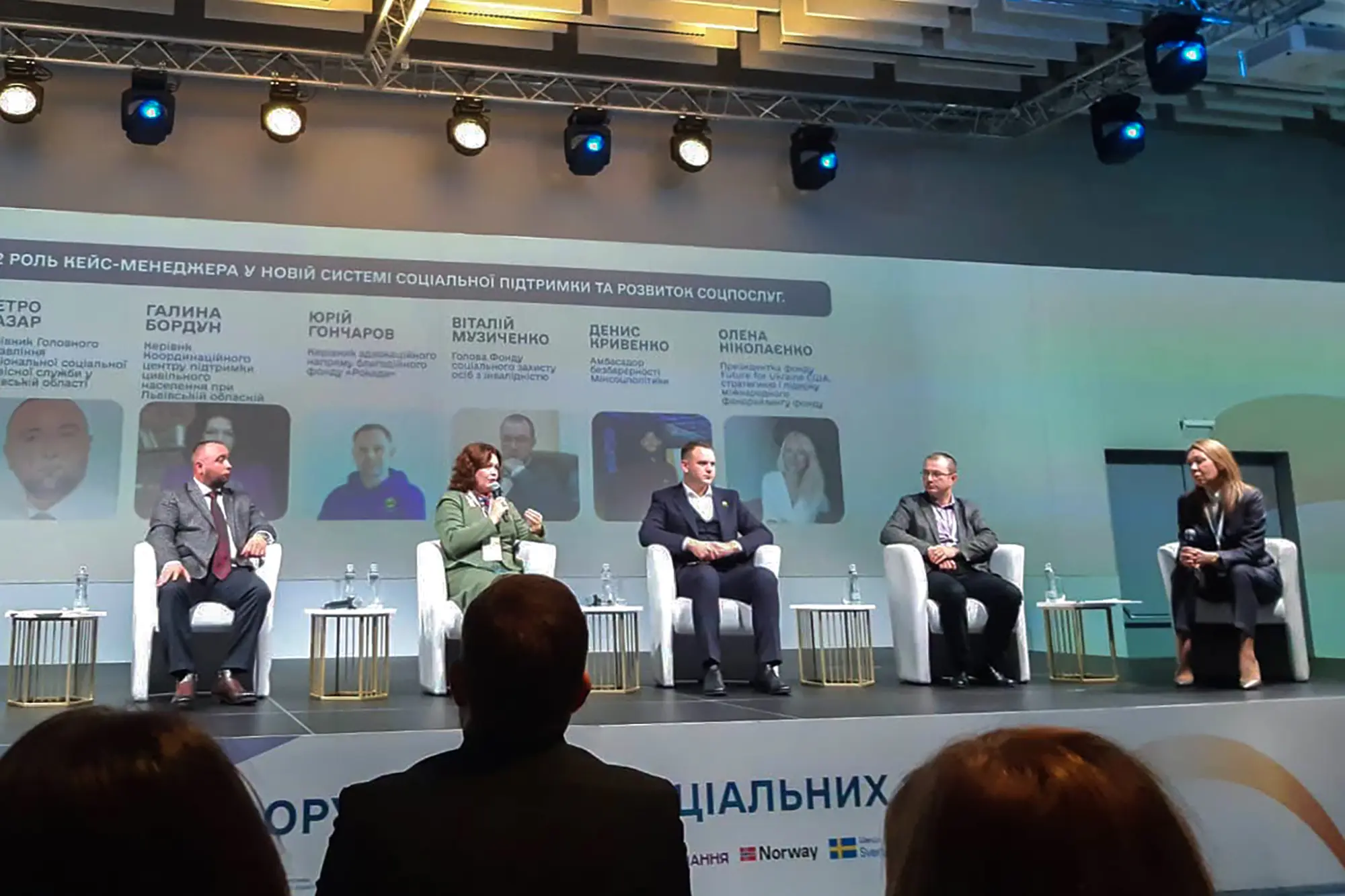
Yurii Honcharov, Rokada’s advocacy coordinator, spoke about supported living at the forum. For the second year in a row, the foundation, together with the Ministry of Social Policy and with the support of the UN Refugee Agency, has been running the School of Supported Living. There, communities and service providers learn how the service works and what steps are needed to introduce it locally.
“Every day we choose for ourselves what to eat for breakfast, what to wear, when to go for a walk. In a residential institution, many of these decisions are dictated by a common schedule, and a person’s life follows a set routine. Supported living gives people the opportunity to decide for themselves how to spend their day and to receive help in making that choice,” explains Yurii Honcharov.
At the same time, he stresses, the state separately funds supported living for certain categories of internally displaced Ukrainians on a “money follows the person” basis.
“For the service to work, we need to reach the people who have not yet asked for help, find affordable housing close to shops, transport and loved ones, calculate the funding, build a team with decent pay and establish coordination between communities. And to understand whether the service really works, let’s ask the person: what can they now decide for themselves, and do they get help when they need it,” notes Rokada’s advocacy coordinator.
Among those who have settled in the supported living centre is 75-year-old Ivan Palivoda from Zaporizhzhia. He is now a participant in the social adaptation project that Rokada is implementing in the Lviv, Ivano-Frankivsk, Rivne, Volyn, Chernivtsi, Khmelnytskyi and Zhytomyr regions.
The supported living centre is located in Zaplatyn, in the Stryi community.
“Only now do I feel a kind of inner quiet and peace. I have friends here, we watch TV together, spend time together… Sometimes I think I might stay here for good,” reflects Ivan Palivoda, adding that he goes to church every Sunday and walks with friends during the week. “We always greet everyone we meet. That’s the custom here.”